

June 7, 2026
Architectural Styles for Luxury Homes: 2026 Guide
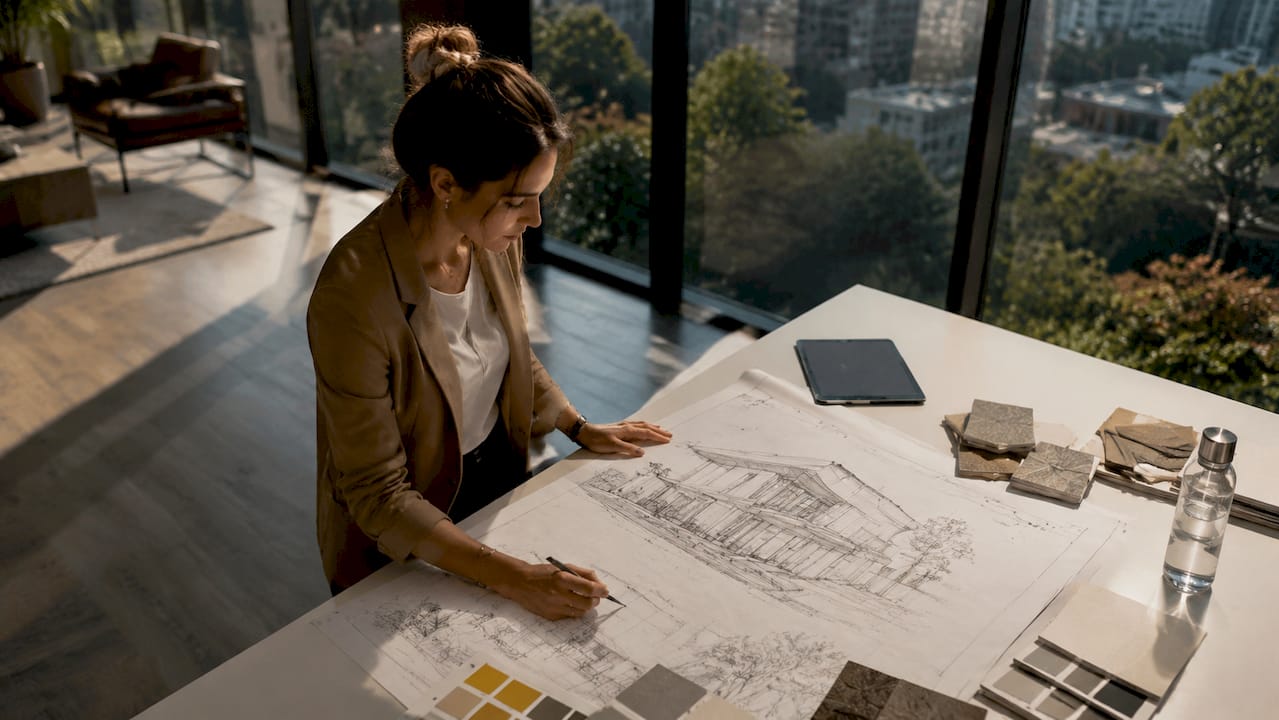
Architectural styles for luxury homes are defined as the visual, structural, and cultural frameworks that determine a residence’s aesthetic identity, market value, and livability. The right style does more than signal status. It shapes how natural light enters a room, how indoor spaces connect to outdoor terraces, and how a property holds its value over decades. In 2026, the most sought-after luxury residential architecture balances timeless grandeur with regional authenticity, sustainable technology, and site-integrated design. From Mediterranean Revival to Modern and Craftsman, the style you choose is one of the most consequential decisions in any high-end build.
1. Architectural styles for luxury homes: the top styles defined
Understanding the defining characteristics of each major style is the starting point for any serious luxury homeowner or investor. Each tradition carries its own visual language, construction logic, and buyer profile.
Mediterranean Revival
Mediterranean Revival remains one of the highest-value luxury home styles in the U.S., consistently associated with the most expensive residential properties in markets like Los Angeles, Miami, and Santa Barbara. Its hallmarks include stucco exteriors, clay tile roofs, arched doorways, wrought-iron details, and courtyard layouts designed to dissolve the boundary between interior living and outdoor terraces. The style performs particularly well in warm, sun-drenched climates where its loggia-centered floor plans feel natural rather than forced.
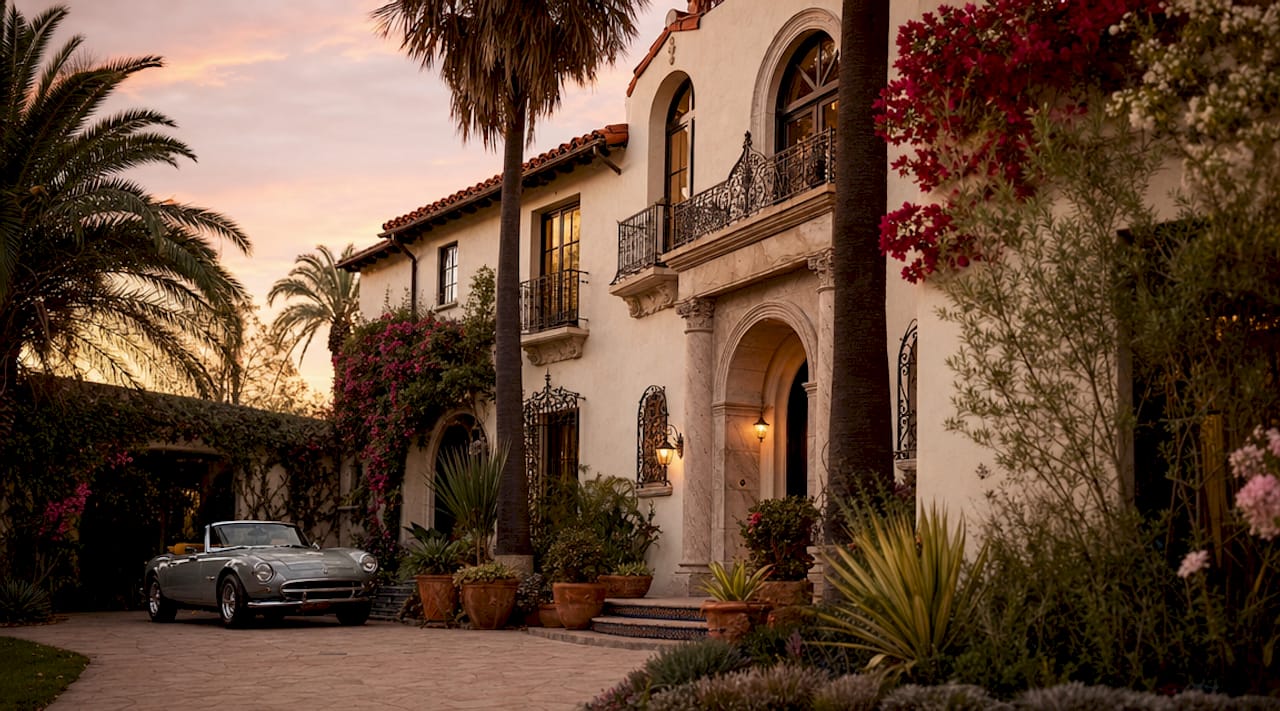
Pro Tip: If you are building Mediterranean Revival in Los Angeles, study the local architectural vernacular before finalizing your facade. Authentic regional detailing commands a measurable premium over generic interpretations.
Modern architecture
Modern architecture in the luxury segment is defined by clean rectilinear forms, expansive glass walls, flat or low-pitched roofs, and a deliberate absence of ornamental detail. The goal is to let the site do the talking. Firms like Olson Kundig have built their reputation on designs that blur interior-exterior boundaries, turning mountain views or Pacific coastlines into dynamic architectural features. Floor-to-ceiling glazing is not decorative here. It is structural philosophy.
Craftsman style
Craftsman style prioritizes artisanal quality over sheer scale, featuring exposed wood beams, stone piers, handcrafted built-ins, and deep covered porches. This style appeals to connoisseurs who value material integrity over grandeur. It is a niche within the luxury market, but a loyal one. Maintenance demands are higher than with stucco-clad styles, and the visual language reads as warm and intimate rather than imposing.
Traditional and Colonial
Traditional Colonial and related styles comprise roughly half of the U.S. luxury home market, offering unmatched liquidity and buyer familiarity. Classic proportions, symmetrical facades, brick or clapboard exteriors, and formal entry sequences define this category. For investors prioritizing resale velocity over architectural distinction, Traditional remains the safest and most liquid choice.
Contemporary and sustainable
Contemporary luxury home plans blend bold forms, mixed materials, and smart building systems to support highly customizable and sustainable lifestyles. Flat roofs, floor-to-ceiling windows, photovoltaic panels, and green roofs are standard features. This style is the fastest-growing segment in the luxury market precisely because it accommodates both aesthetic ambition and environmental responsibility.
2. How luxury architectural styles compare in market value and suitability
Choosing a style without understanding its market positioning is a costly mistake. The table below compares six leading styles across the factors that matter most to luxury buyers and investors.
| Style | Market price tier | Buyer appeal | Maintenance | Climate fit | Sustainability potential |
|---|---|---|---|---|---|
| Mediterranean Revival | Ultra-premium | Broad, prestige-driven | Moderate | Warm, coastal | Medium |
| Modern | Premium to ultra-premium | Design-forward buyers | Low to moderate | Universal | High |
| Craftsman | Premium | Connoisseurs, artisan buyers | High | Temperate | Medium |
| Traditional Colonial | Premium | Broad, investor-friendly | Low to moderate | Universal | Low to medium |
| Contemporary | Premium to ultra-premium | Eco-conscious, tech-forward | Low | Universal | Very high |
| Coastal Mediterranean | Ultra-premium | Waterfront buyers | Moderate | Coastal, humid | Medium to high |
Mediterranean Revival commands the highest average prices in warm-climate markets, while Craftsman occupies a respected but narrower niche. Modern and Contemporary styles attract buyers who prioritize design integrity and sustainability over historical familiarity. Traditional Colonial wins on liquidity. It sells faster and to a wider buyer pool than any other category, which matters enormously if your investment horizon is under ten years.
Pro Tip: If you are building in a neighborhood with a strong existing architectural identity, matching that identity increases your resale value. Architect Jim Cappuccino recommends prioritizing regional vernacular to maximize both authenticity and long-term market appeal.
3. Emerging trends shaping luxury home architecture in 2026
The luxury residential market in 2026 is not standing still. Several forces are reshaping what buyers expect and what builders must deliver.
-
Sustainability as a baseline requirement. Eco-friendly design has moved from a differentiator to a standard expectation in the luxury segment. Solar integration, energy-efficient glazing, and lifecycle-conscious material selection are now table stakes, not upgrades. Buyers who would have accepted a beautiful home without photovoltaic panels five years ago now expect them as part of the package.
-
Indoor-outdoor integration at scale. The most celebrated luxury projects of 2026 treat the landscape as a room. Retractable glass walls, covered outdoor kitchens, and infinity-edge pools that align with horizon lines are defining features of the current market. This approach, championed by firms like Olson Kundig, turns natural surroundings into the home’s primary design element.
-
Regional authenticity over imported styles. Buyers and appraisers alike are increasingly skeptical of styles that feel transplanted without contextual logic. A Tuscan home design in coastal Maine or a Spanish Colonial in the Pacific Northwest signals a disconnect between architecture and place. Regional vernacular styles retain cultural meaning and maximize long-term investment value in ways that imported aesthetics rarely achieve.
-
Functional spatial organization. Open floor plans remain popular, but the market is correcting toward intentional spatial hierarchy. Buyers want connected spaces that still offer acoustic privacy and defined purpose. The great room that flows into the kitchen that flows into the dining area works beautifully in photography. It works less well when you are hosting a dinner party and a teenager is gaming in the adjacent space.
-
Avoiding stylistic overreach. Parametricism and deconstructivism, while visually striking, tend to increase construction and maintenance costs and are less market-friendly than well-balanced luxury styles. Complex non-rectilinear geometries complicate both the build process and future resale. The most successful luxury projects balance bold visual impact with functional layout and maintainable design.
4. Which architectural style fits your priorities and environment
Selecting the right style requires honest alignment between your lifestyle, your site, and your investment goals. The following framework guides that decision.
-
Traditionalists seeking prestige and liquidity. Colonial and Mediterranean Revival are the strongest choices. Both carry broad buyer recognition, command premium prices in their respective markets, and offer clear historical precedent that appraisers understand. Mediterranean Revival is the better choice for warm coastal climates; Colonial performs across a wider geographic range.
-
Modernists prioritizing design integrity. Modern and Contemporary styles deliver the cleanest expression of luxury through restraint. If you value the relationship between your home and its site more than historical ornament, these styles reward that priority. They also offer the highest sustainability potential of any category, which aligns with both personal values and long-term regulatory trends.
-
Eco-conscious buyers. Contemporary architecture with integrated photovoltaic panels, passive cooling strategies, and green roofs is the natural fit. This style does not require you to sacrifice aesthetic ambition for environmental responsibility. The two are increasingly inseparable in the best luxury builds of 2026.
-
Buyers in coastal or waterfront settings. Coastal Mediterranean architecture, with its emphasis on covered loggias, salt-resistant materials, and indoor-outdoor flow, is purpose-built for waterfront sites. The authentic luxury builds that perform best in coastal markets are those that respond directly to the site’s orientation, prevailing winds, and view corridors.
-
Mountain and high-altitude environments. Mountain Modern, a variant of the broader Modern tradition, uses heavy timber, stone, and expansive glazing to connect interior spaces to dramatic landscapes. The style is climatically appropriate, visually powerful, and increasingly popular in markets like Aspen, Park City, and the Sierra Nevada foothills.
-
Buyers balancing distinctiveness with resale value. The safest path is a well-executed version of a recognized style rather than an avant-garde experiment. Overly complex architectural styles can alienate buyers and spike costs. Distinctiveness within a legible tradition outperforms pure novelty in almost every resale scenario.
Key takeaways
The most enduring architectural styles for luxury homes succeed by aligning aesthetic ambition with regional context, functional clarity, and long-term market demand.
| Point | Details |
|---|---|
| Mediterranean Revival leads on price | It consistently ranks among the highest-value styles in warm U.S. luxury markets. |
| Traditional Colonial offers the most liquidity | It comprises roughly half the U.S. luxury market and sells to the widest buyer pool. |
| Regional authenticity protects value | Styles that match local vernacular retain cultural meaning and appraise more reliably. |
| Sustainability is now a baseline expectation | Solar integration and energy-efficient design are standard requirements, not optional upgrades. |
| Complexity increases cost and reduces resale appeal | Bold forms work best when paired with functional layouts and maintainable construction. |
My honest read on style selection after years in luxury builds
I have watched homeowners fall in love with a style they saw in a magazine and spend two years trying to make it work on a site that was never suited for it. The result is almost always a compromise that satisfies no one. The architecture looks borrowed rather than belonging.
The homes that genuinely impress me are the ones where the style feels inevitable given the site. A Modern glass pavilion on a hillside above Los Angeles that frames the city grid like a painting. A Craftsman bungalow in Pasadena where every beam and bracket was selected by someone who understood the tradition from the inside out. These homes do not just look expensive. They feel considered.
My strongest advice is to resist the temptation to treat architectural style as a brand choice, something you pick from a catalog to signal a certain kind of taste. The best luxury homes are built from the site outward, not from a mood board inward. Study the light, the topography, the prevailing winds, and the neighborhood’s existing architectural conversation before you commit to a style. That discipline produces homes that age beautifully and hold their value through market cycles.
I also think the sustainability conversation has matured past the point of debate. Clients who were skeptical of photovoltaic panels and passive cooling strategies five years ago are now requesting them as non-negotiables. That shift is not just environmental. It is financial. Energy-efficient homes carry lower operating costs, qualify for incentives, and increasingly command a premium at resale. Ignoring that reality in a new luxury build is simply leaving money on the table.
— Daniel
Build your vision with Builtblackbriar
Builtblackbriar specializes in luxury home construction across Los Angeles, with deep expertise in the architectural styles that define the region’s most distinguished neighborhoods. Whether your vision calls for a Mediterranean Revival estate with subterranean parking and oversized glass installations, a Contemporary build with integrated photovoltaic systems, or a Craftsman residence with handcrafted millwork throughout, Builtblackbriar brings the technical precision and transparent project management that complex builds demand. Their team keeps clients informed at every phase, delivering projects on time and on budget. Explore Builtblackbriar’s portfolio and begin the conversation about your Westlake luxury build or any Los Angeles project today.
FAQ
What are the most popular architectural styles for luxury homes?
Mediterranean Revival, Modern, Traditional Colonial, Craftsman, and Contemporary are the dominant architectural styles in the U.S. luxury residential market. Mediterranean Revival and Traditional Colonial lead on market volume and price, while Modern and Contemporary attract design-forward and eco-conscious buyers.
Which luxury architectural style has the highest resale value?
Mediterranean Revival consistently commands the highest prices in warm coastal markets, while Traditional Colonial offers the broadest buyer pool and fastest resale velocity. The best resale value comes from executing a recognized style with regional authenticity rather than pursuing novelty.
How does sustainability affect luxury home architectural styles?
Sustainable design is now a core requirement in the luxury segment, with solar integration, energy-efficient glazing, and green roofs expected across Contemporary and Modern styles. Homes with these features carry lower operating costs and increasingly command a premium at resale.
Is Craftsman style a good investment for a luxury home?
Craftsman style appeals to a loyal niche of buyers who value artisanal materials and handcrafted detail, but it carries higher maintenance demands and a narrower buyer pool than Mediterranean Revival or Traditional Colonial. It is an excellent choice for the right client in the right market, less so as a purely investment-driven decision.
What architectural style works best for coastal luxury homes?
Coastal Mediterranean architecture, with its salt-resistant stucco exteriors, covered loggias, and indoor-outdoor floor plans, is purpose-built for waterfront sites. Modern and Contemporary styles with floor-to-ceiling glazing also perform well in coastal settings when oriented to capture views and manage prevailing winds.