

June 16, 2026
Custom Home Build Timeline: Phase-by-Phase Guide

A custom home build timeline spans 12 to 30 months from initial design through move-in, making it one of the most complex personal projects most homeowners will ever manage. Industry data from Rosten Homes confirms that pre-construction alone adds 3 to 9 months, while active construction runs 9 to 18 months depending on project complexity. The industry term for this full sequence is the construction project schedule, though most homeowners simply call it the build timeline. Understanding both the phases and the factors that compress or extend them is the difference between a smooth process and a frustrating one.
What are the main phases of a custom home build timeline?
Every custom home construction timeline follows the same structural sequence, even when durations vary. Knowing what each phase involves helps you set realistic expectations before you sign a single contract.
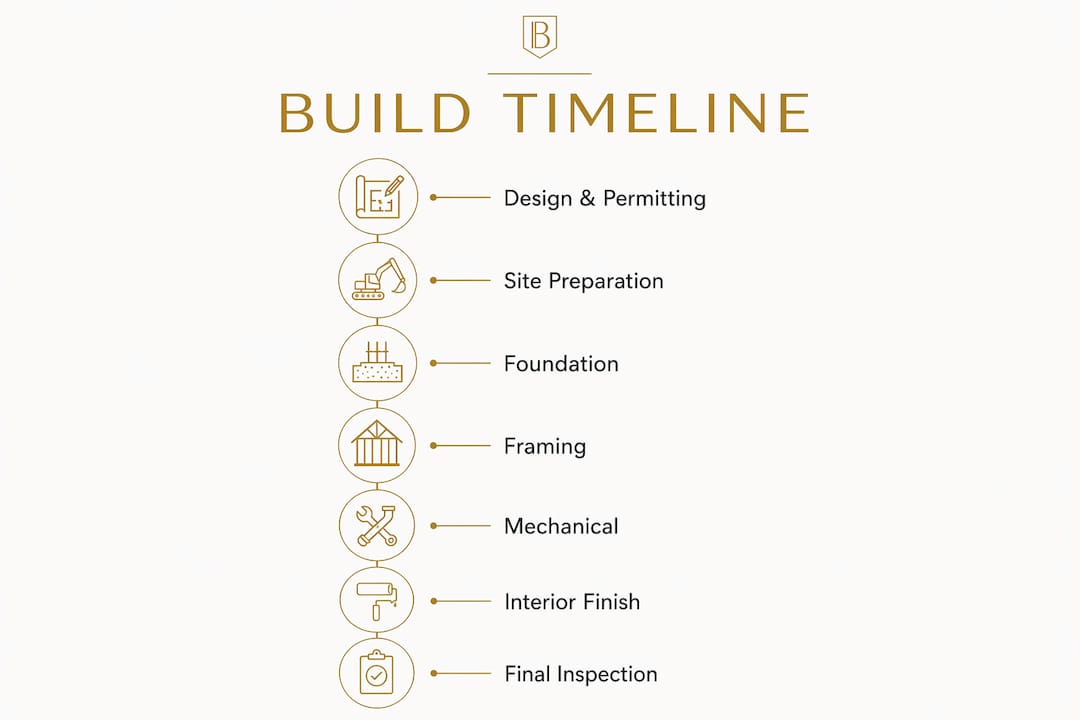
The five core phases are:
- Pre-construction (3–9 months): Architectural design, structural engineering, civil surveys, and municipal permitting. This phase is the most underestimated. Clients often assume it takes weeks. It takes months.
- Site preparation and foundation (1–3 months): Grading, excavation, utility connections, and concrete pours. Weather and soil conditions directly affect this window.
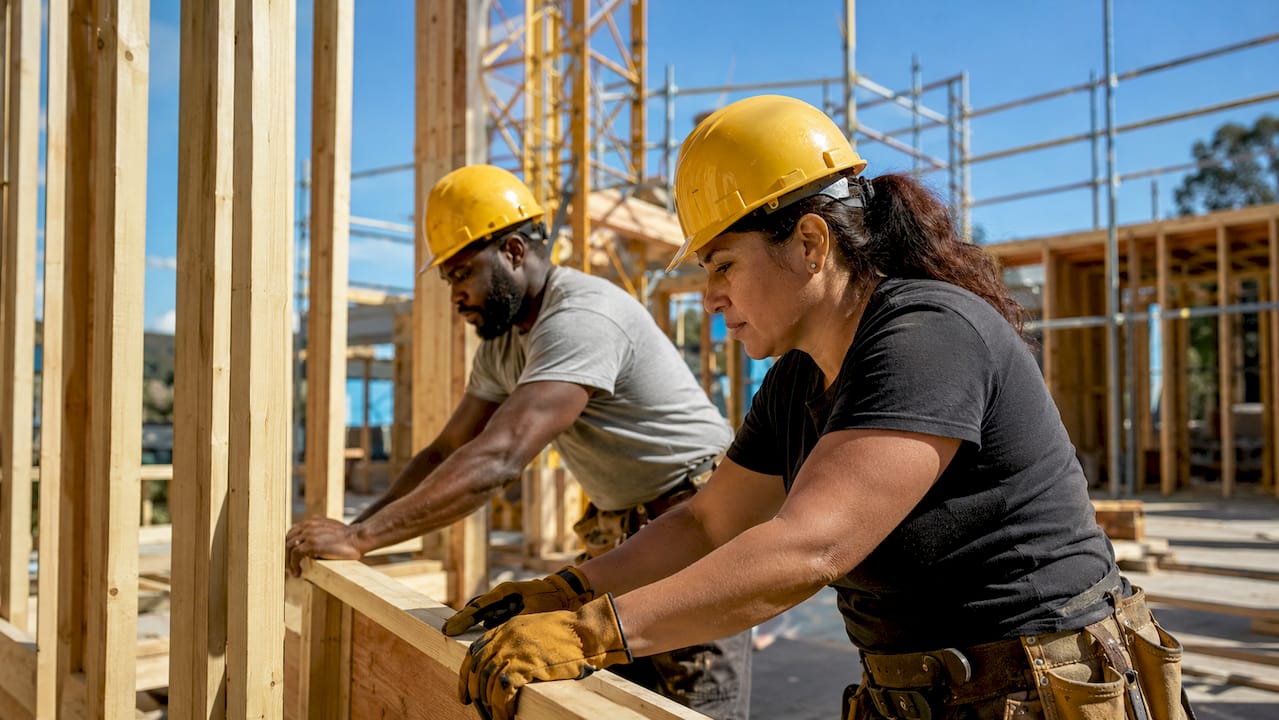
- Framing and rough-ins (2–4 months): Wood or steel framing, followed by rough mechanical, electrical, and plumbing (MEP) installations. Inspections occur at multiple points here.
- Interior and exterior finishes (3–6 months): Insulation, drywall, roofing, windows, cabinetry, flooring, tile, and paint. For luxury builds with specialty materials, this phase extends to 7–9 months.
- Final inspections and closeout (1–2 months): Punch list completion, systems testing, occupancy certificate, and move-in.
The active construction phase (site prep through closeout) typically runs 9–18 months. Add pre-construction, and the full custom home project phases total 12–30 months. Larger footprints, subterranean basements, and oversized glazing systems push toward the upper end of that range.
Which factors most commonly delay a custom home build schedule?
Delays in a building a custom home schedule rarely come from a single source. They compound. A permitting hold pushes your foundation start, which pushes framing, which pushes your cabinetry delivery window. Understanding the root causes gives you the leverage to prevent them.
Permitting and municipal review
Municipal permitting takes 4 to 8 weeks under normal conditions. Complex sites, hillside lots, or projects requiring variance approvals can add 3 to 4 months beyond that. In Los Angeles, projects with subterranean components or significant grading frequently trigger additional review cycles. This is a factor largely outside your builder’s control, which is why experienced firms submit permit packages early and track review status actively.
Weather and site conditions
Experienced builders integrate weather recovery plans directly into their schedules rather than treating rain or heat as surprises. Site work and foundation pours are the most weather-sensitive phases. A builder who does not account for seasonal patterns in their baseline schedule is not being optimistic. They are being imprecise.
Material lead times
Cabinetry lead times run 6 to 12 weeks for custom orders. Imported stone, specialty windows, and high-end appliances often carry similar or longer lead times. These items must be ordered during design or early construction, not when the walls are already up. Missing that window delays the entire finish phase.
Builder operating model and project complexity
Complex custom builds take longer than semi-custom homes by design. A builder who self-performs key trades or maintains tight subcontractor relationships has more schedule control than one who relies entirely on open-market subcontracting. Ask your builder directly how they manage subcontractor scheduling before you commit.
Pro Tip: Expect some delays. Choose a builder who has a written recovery plan for the most common ones, not one who promises a delay-free build.
How does homeowner decision-making affect the build schedule?
Homeowner decisions are the single most controllable variable in the entire custom home construction timeline. Finalizing selections early prevents cascading schedule delays that ripple through multiple trades. A late cabinet decision does not just delay cabinet installation. It delays countertop templating, plumbing trim-out, and appliance installation in sequence.
Your builder will provide a selection schedule tied to construction milestones. Treat those deadlines as hard constraints, not suggestions. Builder schedules often underestimate the time needed for homeowner-driven tasks, which means even a small delay on your end creates a disproportionate impact on the overall timeline.
The table below shows typical decision deadlines by phase:
| Selection Category | When to Decide | Consequence of Delay |
|---|---|---|
| Cabinetry and millwork | During design or permit phase | 6–12 week lead time pushes finish phase start |
| Custom windows and doors | During design phase | Long lead times affect framing and weatherproofing |
| Countertop material | Before drywall completion | Delays plumbing trim-out and appliance placement |
| Flooring and tile | Before finish phase begins | Subcontractor scheduling conflicts |
| Lighting and fixtures | Before electrical rough-in | Requires confirmed locations before walls close |
| Paint colors and wall finishes | Before interior finish phase | Minor but can delay final punch list |
Changing design elements after construction begins causes the most severe delays. Moving a wall during framing triggers re-approval of structural drawings, MEP rerouting, drywall rescheduling, and cabinetry redesign. What feels like a small change in a design meeting translates to weeks of lost schedule time on site.
Pro Tip: Make your selections at least two weeks before your builder’s stated deadline. The best homeowners treat every decision deadline as if it were two weeks earlier than it actually is.
What does a month-by-month custom home timeline look like?
The following table maps a representative month-by-month build schedule for a custom home in the 4,000–6,000 square foot range. Actual durations shift based on complexity, location, and permitting speed.
| Months | Phase | Key Milestones |
|---|---|---|
| 1–3 | Design and permitting | Architectural drawings, engineering, permit submission |
| 4–5 | Site prep and foundation | Grading, excavation, concrete pour, waterproofing |
| 6–7 | Framing and rough-ins | Structural framing, MEP rough-in, framing inspections |
| 8–10 | Insulation, drywall, exterior | Insulation, drywall hang and tape, exterior cladding, roofing |
| 11–14 | Interior finishes | Cabinetry, flooring, tile, paint, fixture installation |
| 15–16+ | Systems testing and closeout | Final inspections, punch list, occupancy certificate, move-in |
For a luxury build in Los Angeles involving subterranean construction or large-format glass systems, add 2–4 months to the finish and closeout phases. The timeline for custom house design alone can extend if the architectural program is complex or if the client requests multiple design iterations before permit submission.
The most important milestone in this sequence is permit approval. Everything before it is planning. Everything after it is construction. Builders who treat permitting as a passive waiting period lose weeks they cannot recover.
How can homeowners minimize delays throughout their build?
Keeping a custom home project on schedule requires active participation from the homeowner, not just the builder. The following practices make a measurable difference:
- Attend every milestone meeting. Site walkthroughs at framing, rough-in, and pre-drywall stages let you catch issues before they become expensive corrections.
- Order long-lead items during design. Experienced builders maintain procurement schedules for cabinetry, windows, and specialty stone. Follow their guidance on ordering windows and cabinetry before the walls go up.
- Avoid mid-construction design changes. Post-construction design changes ripple through multiple trades, including framing, MEP, and drywall. Commit to your design before breaking ground.
- Monitor permitting status actively. Ask your builder for weekly permit status updates. Municipal review queues move faster when applicants follow up consistently.
- Keep detailed records. Document every decision, change order, and approval in writing. This protects you and your builder if disputes arise.
- Choose a builder with subcontractor control. Builders who self-perform key trades or maintain long-term subcontractor relationships recover from delays faster than those who rely on open-market labor.
Pro Tip: Proactive planning before construction begins is worth more than any amount of problem-solving during it. The decisions you make in months one through three determine whether month sixteen is a celebration or a negotiation.
Key Takeaways
A custom home build timeline of 12 to 30 months is the standard range, and homeowner decision discipline is the most controllable factor in whether your project lands at the shorter or longer end.
| Point | Details |
|---|---|
| Total timeline range | Custom home builds run 12–30 months from design through move-in, including pre-construction. |
| Pre-construction weight | Design, engineering, and permitting add 3–9 months before a single shovel hits the ground. |
| Finish phase variability | Luxury or specialty material builds extend the finish phase from 3–6 months to 7–9 months. |
| Homeowner decisions | Late selections cause cascading delays across cabinetry, plumbing, and appliance installation. |
| Permitting reality | Municipal review takes 4–8 weeks minimum; complex sites add 3–4 months beyond that. |
What I have learned from watching timelines succeed and fail
I have spent years working alongside homeowners who arrive at the design table with a clear vision and a firm move-in date in mind. The ones who hit that date share one trait: they treat the selection schedule as seriously as the construction schedule. The ones who miss it by three or four months almost always trace the delay back to a cabinet decision made six weeks late, or a countertop material that was not ordered until the drywall was already up.
The other pattern I have observed is that homeowners sometimes underestimate the weight of pre-construction. They see the permit phase as administrative overhead, a waiting room before the real work begins. In reality, a well-executed permit package submitted to the city with complete structural and MEP drawings moves through review faster and with fewer correction cycles. Builders who invest in thorough pre-construction documentation save weeks on the back end.
My honest advice: do not choose a builder based on the shortest timeline promise. Choose one based on how clearly they can explain what drives their schedule, what their recovery plan looks like when weather or permitting causes a hold, and how they communicate with you when things shift. A builder who gives you a realistic 18-month schedule and hits it is worth far more than one who promises 14 months and delivers 20.
The build itself is a long process. The home you end up with is permanent. Patience combined with proactive engagement, not passive waiting, is what gets you there on time.
— Daniel
How Builtblackbriar manages your timeline from day one
Managing a luxury custom home build in Los Angeles requires more than a good floor plan. It requires a builder who tracks permitting status, orders long-lead materials on a disciplined procurement schedule, and keeps you informed at every phase without you having to chase updates.

Builtblackbriar specializes in complex, high-end builds across Los Angeles, including projects with subterranean basements, oversized glass installations, and intricate millwork that extend the finish phase. Their process integrates technology-driven communication so clients receive real-time updates and stay involved in every decision. If you are planning a custom home in Los Angeles and want a builder with a track record of on-time, on-budget completions, Builtblackbriar is built for exactly that kind of project.
FAQ
How long does it take to build a custom home from start to finish?
A custom home build typically takes 12 to 30 months from initial design through move-in. Pre-construction adds 3–9 months, and active construction runs 9–18 months depending on project size and complexity.
What causes the most delays in a custom home build?
Permitting holds, late material selections, and mid-construction design changes are the most common causes. Municipal review alone takes 4–8 weeks, and complex sites can add 3–4 months beyond that.
When should I order cabinetry and custom windows for my build?
Order cabinetry and custom windows during the design or permitting phase. Cabinetry lead times run 6–12 weeks, and missing the ordering window delays the entire finish phase.
Can I make design changes after construction starts?
Design changes after construction begins cause significant delays. Moving a wall during framing triggers structural re-approval, MEP rerouting, and drywall rescheduling, which can add weeks to the overall timeline.
How do I know if my builder has a realistic schedule?
Ask your builder to walk you through their phase-by-phase schedule, their permitting strategy, and their recovery plan for weather or material delays. A builder who can answer those questions specifically is far more reliable than one who offers only a total duration estimate. You can also review how custom home selections work to understand what a disciplined builder expects from you in return.