

May 31, 2026
Luxury Custom Home Building Process: Phase-by-Phase Guide

The luxury custom home building process is a structured sequence of phases moving from initial vision through architectural design, permitting, construction, and final move-in. Unlike production home builds, this process demands active homeowner participation at every stage, with decisions on finishes, materials, and approvals directly shaping both the timeline and the final result. Understanding each phase before you break ground is the single most effective way to protect your budget, your schedule, and your sanity. This guide walks you through every critical stage, the key players involved (builder, architect, lender), and the decisions that separate smooth projects from costly ones.
What are the key phases in the luxury custom home building process?
The luxury custom home building process follows a defined sequence, and knowing the duration of each phase sets realistic expectations from day one. High-end custom home projects often take 24 to 48 months from initial consultation to move-in, driven by design complexity, specialty materials, and subcontractor sequencing. That timeline is not a warning. It is a planning tool.
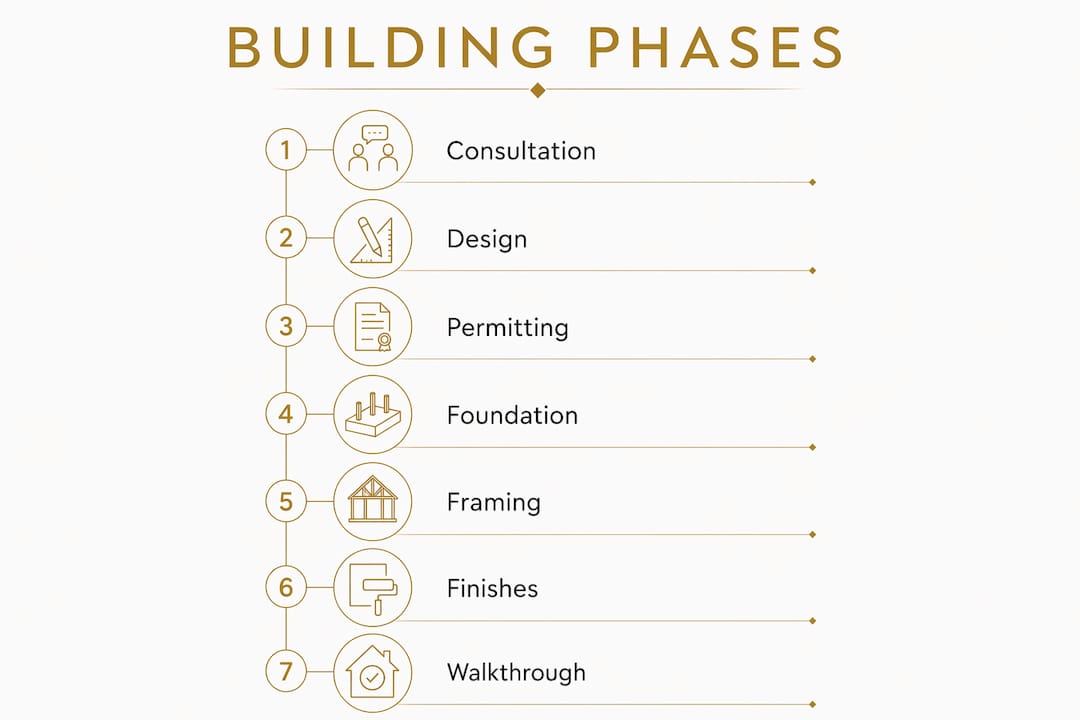
The phases break down as follows. Initial consultation and lot selection typically run one to three months, covering site analysis, zoning verification, and builder alignment. The design and architecture phase, where your architect produces schematic drawings, construction documents, and material specifications, runs three to six months on a standard luxury project and can extend to a full year on highly customized builds. Permitting follows, and most clients underestimate this stage significantly.
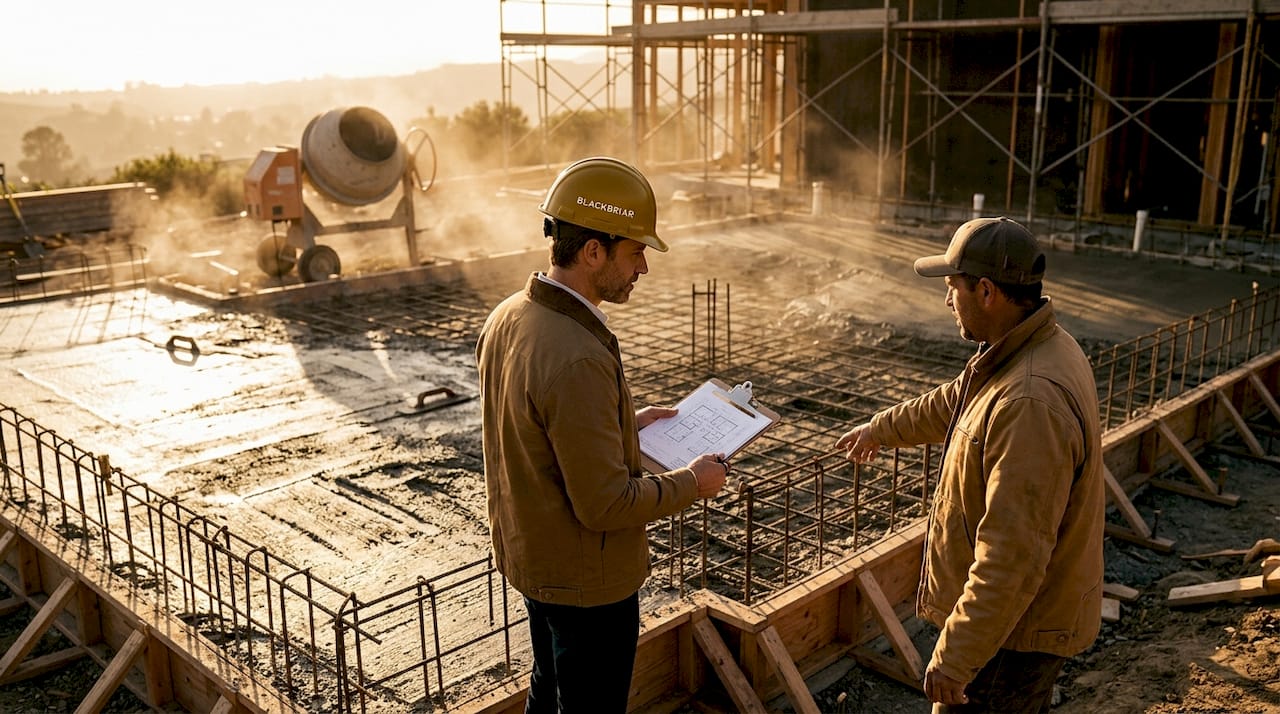
Once permits are issued, site preparation and foundation work begin, running roughly one to three months depending on soil conditions and basement complexity. Framing, mechanical rough-ins (plumbing, electrical, HVAC), and insulation together span three to six months. The finish phase, covering tile, cabinetry, millwork, flooring, and fixtures, is often the longest single construction stage at three to five months, because it involves the most trades working in sequence. Final inspections, punch list resolution, and Certificate of Occupancy close out the build.
| Phase | Typical Duration |
|---|---|
| Initial consultation and lot selection | 1 to 3 months |
| Design and architecture | 3 to 12 months |
| Permitting and approvals | 2 to 6 months |
| Site prep and foundation | 1 to 3 months |
| Framing and mechanical rough-ins | 3 to 6 months |
| Finishes and interior work | 3 to 5 months |
| Final inspections and closeout | 1 to 2 months |
Pro Tip: Lock your lot before finalizing your architectural program. Soil reports, easements, and setback requirements on a specific parcel will reshape your floor plan more than any design preference.
What homeowner decisions directly impact your build timeline?
The homeowner’s role in a luxury custom build is not passive. Missed deadlines on finish selections cause construction delays or force the use of in-stock substitute items, because most specialty materials carry lead times of four to twelve weeks after the relevant construction phase begins. Missing a cabinet selection deadline by two weeks can push your finish phase back by six.
The categories with the longest lead times deserve your earliest attention. Custom cabinetry typically requires eight to sixteen weeks from order to delivery. Oversized windows and steel doors can run twelve to twenty weeks. Decorative plumbing fixtures from European manufacturers such as Waterworks or Lefroy Brooks often carry ten to fourteen week lead times. Stone slabs sourced from quarries in Italy or Brazil require early reservation and shipping coordination.
Your builder will provide a selections schedule, a calendar of deadlines tied to construction milestones. Treat every deadline on that schedule as binding. Responding promptly to builder questions, authorizing construction loan draws on time, and approving plan revisions without delay are all homeowner-owned tasks that directly control the project’s forward momentum.
Here is a clear breakdown of who owns what:
- Homeowner responsibilities: Finalizing finish selections by scheduled deadlines, authorizing loan draws, approving design changes, responding to RFIs (requests for information) within 48 hours, and attending milestone walkthroughs.
- Builder responsibilities: Subcontractor scheduling, permit coordination, inspection management, quality control, and maintaining the master project schedule.
Pro Tip: Create a dedicated email folder and shared cloud drive for all project documents from day one. Builders like Builtblackbriar use project management platforms that centralize communication, but your own organized records protect you if disputes arise.
How do permitting and regulatory approvals affect your schedule?
Permitting is the phase most likely to surprise first-time luxury home builders. Municipal building permits for luxury custom homes arrive as a bundled set of overlapping approvals, including zoning variances, HOA or Architectural Review Committee sign-off, structural engineering review, energy compliance documentation, and in coastal or hillside zones, environmental or geological assessments. Each authority operates on its own timeline, and one delayed approval holds all the others.
In Los Angeles, for example, a hillside project with a subterranean basement may require approvals from the Department of Building and Safety, the Bureau of Engineering, the Department of City Planning, and a private soils engineer, all before a single permit is issued. Coastal properties add California Coastal Commission review. HOA communities layer their own Architectural Review Committee process on top of municipal requirements. Experienced builders who specialize in these jurisdictions know how to sequence submissions to minimize wait time.
Design-build firms that integrate architecture and construction under one roof reduce the change orders and coordination failures that arise when design and construction teams work separately. When the architect and the builder share the same project goals and communication channels, permit drawings are more accurate, revisions are faster, and the transition from approved plans to active construction is cleaner.
Typical permits and their average approval windows in a complex urban market include:
- Building permit (structural and architectural): 6 to 16 weeks
- Zoning or variance approval: 4 to 12 weeks (longer if a public hearing is required)
- HOA or ARC approval: 2 to 8 weeks
- Grading and drainage permit: 4 to 8 weeks
- Mechanical, electrical, and plumbing permits: 2 to 6 weeks (often issued concurrently with building permit)
Pro Tip: Ask your builder for a permit history on comparable projects in your specific municipality. A builder with ten permitted hillside projects in Bel Air will navigate the process faster than one doing it for the first time.
What are the biggest challenges during luxury home construction?
Construction is where planning discipline pays off or where its absence becomes expensive. Locking long-lead selections before breaking ground is the single most effective practice for maintaining schedule integrity on a luxury custom build. Cabinets, tile, windows, doors, and plumbing fixtures ordered after framing begins will almost always arrive late relative to when they are needed.
Subcontractor coordination is the other major variable. A luxury home involves dozens of specialty trades, including framers, concrete contractors, waterproofers, electricians, plumbers, HVAC technicians, tile setters, cabinet installers, millwork fabricators, painters, and finish carpenters. Each trade depends on the one before it. A delayed rough-in inspection pushes insulation, which pushes drywall, which pushes paint, which pushes every finish trade behind it. Coordinating inspection windows and maintaining photo documentation at each stage prevents rework and keeps construction loan draws on schedule.
Common challenges and the practices that address them:
- Long-lead item delays: Order cabinets, windows, and specialty fixtures before or immediately after permit approval.
- Change order creep: Freeze the design before construction begins. Every mid-build change costs two to three times its apparent price in labor disruption.
- Inspection bottlenecks: Schedule inspections proactively, not reactively. Build inspection windows into the master schedule.
- Loan draw delays: Align your lender’s draw schedule with construction milestones and submit draw requests with complete documentation.
- Subcontractor availability: Book specialty trades (oversized glass installers, custom metalwork fabricators) during the design phase, not during construction.
Pro Tip: Request a weekly written progress report from your builder. Builtblackbriar provides clients with real-time project updates through a dedicated platform, which removes the guesswork and keeps you informed without requiring constant site visits.
What should you expect during final walkthrough and move-in?
The final phase of the luxury home build process is methodical and documentation-heavy. Before you receive your keys, your builder conducts a punch list walkthrough, a room-by-room inspection that catalogs every incomplete or deficient item, from a paint touch-up to a misaligned cabinet door. You attend this walkthrough with your builder and document every item in writing, with photographs. Completion of the punch list is a condition of final payment.
The Certificate of Occupancy (CO) is issued by the local building department after all final inspections pass, including structural, electrical, plumbing, mechanical, and fire safety. You cannot legally occupy the home without it. Your builder coordinates these inspections and resolves any outstanding corrections before the CO is issued.
At closeout, your builder transfers a complete documentation package that includes:
- All original permits and approved plans
- Manufacturer warranties for appliances, roofing, windows, and mechanical systems
- Operation manuals for home systems (HVAC, home automation, security, irrigation)
- Contact information for all subcontractors and suppliers
- A builder warranty document outlining coverage periods for workmanship and materials
Schedule a builder orientation session before move-in to walk through every home system in person. A one-year warranty walkthrough, conducted roughly eleven months after move-in, is standard practice and gives you a formal opportunity to document any settlement cracks, door adjustments, or system issues before the builder’s warranty period closes.
Key takeaways
The luxury custom home building process succeeds when homeowners treat every phase, from selections deadlines to permit sequencing, as an active responsibility rather than a passive wait.
| Point | Details |
|---|---|
| Timeline is 24 to 48 months | High-end builds require extended planning for design, permitting, and specialty materials. |
| Selections deadlines are binding | Missing finish deadlines by even two weeks can delay construction by six or more weeks. |
| Permitting is multi-layered | Luxury builds require concurrent approvals from municipalities, HOAs, and engineers. |
| Lock long-lead items early | Order cabinets, windows, and fixtures before or immediately after permit approval. |
| Final closeout requires documentation | Receive all permits, warranties, manuals, and a signed punch list before accepting keys. |
What I’ve learned about building luxury homes without losing your mind
Working through complex luxury builds in Los Angeles, including projects with subterranean basements and oversized structural glass, has taught me one thing above all else: the homeowners who enjoy the process are the ones who treat it like a partnership, not a transaction. The clients who struggle are almost always the ones who expected to hand over a check and return to a finished home.
The most common misconception I encounter is that a higher budget buys a shorter timeline. It does not. A $10 million custom home in Bel Air takes longer than a $2 million production home precisely because of its complexity. Custom stone sourced from Portugal, a cantilevered steel structure, a home automation system integrated across 8,000 square feet: each of these adds weeks, not days, to the schedule. Extended timelines of 24 to 48 months carry real financial weight in carrying costs, temporary housing, and decision fatigue. Plan for them honestly.
The second thing I would tell every client before they break ground: make your decisions early and hold them. The design phase exists so that you can change your mind without consequences. Once framing begins, every change order is a negotiation with time and money. Clients who select a custom home builder with a proven design-build model, where the architect and the construction team share the same goals and the same communication platform, consistently report fewer surprises and more satisfying outcomes.
— Daniel
Build your vision with Builtblackbriar
Builtblackbriar brings a transparent, technology-driven approach to luxury home building in Los Angeles, with a track record of on-time, on-budget completions on some of the region’s most complex residential projects. From subterranean basements in the Hollywood Hills to oversized glass installations in Bel Air, the team specializes in builds that demand precision at every phase.

Clients receive real-time project updates through a dedicated communication platform, keeping them informed and involved without requiring constant site visits. If you are planning a luxury custom home and want a builder who treats your timeline and budget with the same care as the design itself, explore Builtblackbriar’s luxury home services and start the conversation today.
FAQ
How long does the luxury custom home building process take?
High-end custom home projects typically take 24 to 48 months from initial consultation to move-in, with design alone running three to twelve months and construction spanning ten to eighteen months or more.
What is the biggest cause of delays in luxury home construction?
Missed selections deadlines and long lead times on specialty materials are the most common causes of delay. Cabinets, custom windows, and imported fixtures can take four to sixteen weeks to arrive after ordering.
Do I need a design-build firm for a luxury custom home?
A design-build approach reduces change orders and budget overruns by keeping architecture and construction under one coordinated team. It is not required, but it consistently produces fewer conflicts and more predictable timelines on complex luxury builds.
What permits are required for a luxury custom home in Los Angeles?
Luxury builds in Los Angeles typically require a building permit, zoning or variance approval, grading and drainage permits, HOA or Architectural Review Committee sign-off, and separate mechanical, electrical, and plumbing permits. Hillside and coastal projects add geological and environmental review layers.
What happens at the final walkthrough before move-in?
The final walkthrough produces a written punch list of every incomplete or deficient item in the home. Completion of the punch list, along with issuance of a Certificate of Occupancy after all final inspections pass, is required before you take possession of the property.