

June 23, 2026
On-Budget Luxury Completions: Real Examples That Work
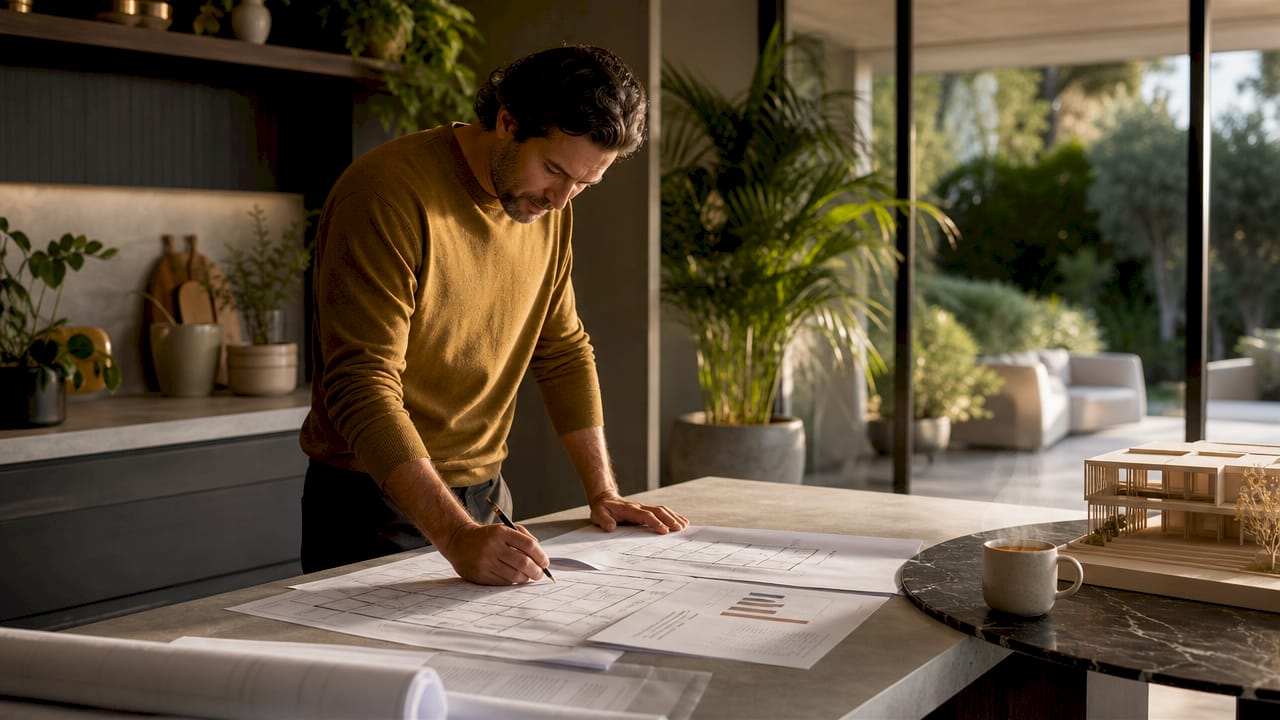
On-budget luxury completions are finished projects that deliver high-end aesthetics and quality without exceeding the approved financial plan. The industry term for this discipline is “cost-controlled luxury delivery,” and it applies equally to new builds, full renovations, and penthouse fit-outs. The best examples of on-budget luxury completions share three traits: disciplined budget allocation, early team integration, and strategic material selection. Homeowners and real estate investors in competitive markets like Los Angeles increasingly rely on tools like Buildertrend for real-time cost tracking and structured FF&E procurement schedules to keep complex projects on track. This article breaks down specific project types, budget frameworks, and design strategies that prove luxury and financial discipline are not opposites.
1. Examples of on-budget luxury completions across project types
Cost-controlled luxury delivery succeeds most consistently when project teams define the budget structure before a single wall is touched. The following examples illustrate how different project types achieve that balance.
Luxury penthouse renovation. A Belgravia penthouse case study shows a detailed budget split: 36% allocated to structure, 32% to interiors, 23% to MEP (mechanical, electrical, and plumbing) and compliance, and 9% to professional fees and contingency. That breakdown proves that interiors and structure together consume nearly 70% of a luxury budget, making early decisions in those two categories the highest-leverage choices.

Subterranean basement addition. Complex underground builds require precise waterproofing, structural engineering, and MEP coordination. Projects that plan these phases together from day one avoid the costly redesigns that occur when contractors and designers work in isolation. Builtblackbriar specializes in exactly this project type in Los Angeles, where soil conditions and seismic requirements add layers of technical complexity.
Oversized glass installation. Floor-to-ceiling glazing creates immediate visual luxury. The budget risk is logistics: crane access, custom framing, and thermal performance specifications. Projects that include these line items in the original bid stay on budget. Projects that treat them as afterthoughts do not.
Full home renovation with smart home integration. Smart home systems planned early add roughly 10–15% to a construction budget. Retrofitting those same systems after construction is significantly more expensive. Homeowners who lock in their technology specifications during design development capture this cost at its lowest point.
Key features that appear across all successful on-budget luxury completions:
- Itemized proposals reviewed before contract signing
- Contingency reserves set at the project outset
- FF&E (furniture, fixtures, and equipment) procurement scheduled alongside construction milestones
- Regular financial review meetings between owner, contractor, and designer
2. How to allocate and control budgets for luxury projects
Budget control in luxury construction starts with a clear category breakdown. Without one, costs migrate between line items and overruns become invisible until they are too large to correct.
A typical luxury project budget distributes across five categories: structural work, MEP systems, interior finishes, FF&E, and professional fees plus contingency. Land acquisition, soft costs, and landscaping add 25–40% on top of hard construction costs for new builds. That figure surprises many first-time luxury homeowners who focus only on the build itself.
The table below shows a practical budget allocation framework for luxury projects:
| Category | Typical allocation | Notes |
|---|---|---|
| Structure and shell | 30–40% | Foundation, framing, roofing, waterproofing |
| MEP and compliance | 20–25% | HVAC, electrical, plumbing, permits |
| Interior finishes | 25–35% | Flooring, millwork, ceilings, tile |
| FF&E and smart systems | 10–15% | Furniture, fixtures, AV, automation |
| Professional fees and contingency | 9–15% | Architects, designers, 10–20% reserve |
Contingency reserves of 10–20% protect against unforeseen structural issues, material delays, and scope adjustments. Older buildings or projects with major layout changes lean toward the 20% end of that range.
Regular cost tracking and itemized proposals prevent surprises during luxury renovations. Reviewing financials at each project milestone keeps all parties aligned and gives owners the information they need to make real-time decisions.
Pro Tip: Lock in your FF&E selections before construction begins. Late changes to furniture or fixture specifications trigger re-ordering fees, revised lead times, and sometimes structural modifications that cost far more than the original item.
3. Affordable luxury design ideas and cost-effective finishes
Luxury is defined by atmosphere and clarity of design, not by material cost alone. Designer Kelly Wearstler articulates this directly: luxury is clarity of design and emotional atmosphere, not a price tag on a surface. That shift in definition opens significant room for budget-conscious homeowners to create genuinely high-end spaces.
The most effective framework for affordable luxury design is the “High-Low” method, championed by interior designer Meg Booth. The principle is straightforward: splurge on art and lighting, then balance those focal points with high-quality but reasonably priced textiles, vintage patterns, and layered textures. Lighting and art carry the visual weight of a room. Everything else supports them.
“Anchoring a space with one or two strong focal points, then layering in budget-friendly textures, creates the depth and richness that defines quiet luxury.” — Meg Booth, Interior Designer
The “Quiet Luxury” aesthetic, which favors restraint, natural materials, and considered proportions over flashy finishes, is particularly well-suited to cost-controlled projects. It rewards precision over excess. A project exploring quiet luxury design in a small footprint demonstrates how disciplined material choices and spatial clarity deliver a high-end result without high-end square footage costs.
Practical design choices that deliver luxury aesthetics at controlled cost:
- Engineered hardwood over solid hardwood: nearly identical appearance, lower material and installation cost
- Large-format porcelain tile in wet areas: replicates natural stone at a fraction of the price
- Integrated LED lighting with dimmer controls: transforms any room’s atmosphere for a modest budget
- Custom millwork on one feature wall rather than throughout: concentrates visual impact where it matters most
- Linen and cotton textiles in neutral tones: signal quality without designer price points
Pro Tip: Invest in one statement light fixture per room. A well-chosen pendant or chandelier reads as luxury regardless of what surrounds it, and it costs far less than replacing every surface finish.
4. The role of integrated project management in preventing budget overruns
Early team integration is the single most effective tool for keeping luxury projects on budget. Managing architects, contractors, and interior designers in silos frequently leads to budget overruns through scope creep, conflicting specifications, and expensive redesigns. When those three roles coordinate from the first design meeting, decisions made in one discipline account for the constraints of the others.
Scope creep is the most common budget killer in luxury construction. It occurs when small additions accumulate without formal cost review. A single undocumented change order for a relocated partition wall can cascade into revised MEP routing, new flooring cuts, and adjusted millwork dimensions. Each change is minor. Together, they add 10–20% to project costs.
FF&E logistics costs are frequently omitted from initial bids. Crating, hoisting, off-site storage, and final site-cleaning fees affect cash flow in the final weeks of a project, exactly when budgets are most exposed. Including these line items in the original procurement plan eliminates that risk.
Best practices for integrated luxury project management:
- Appoint a single point of contact who coordinates between architect, contractor, and designer throughout the project.
- Establish a change order protocol before construction begins, requiring written approval and cost impact for every modification.
- Schedule procurement milestones alongside construction milestones so FF&E arrives on time without requiring paid storage.
- Conduct weekly financial reviews comparing actual spend against the approved budget by category.
- Document all vendor communications in a shared platform so no specification detail is lost between team members.
Builtblackbriar applies this integrated model on every project, using technology to give clients real-time visibility into costs and schedule. That transparency is what separates on-budget completions from projects that drift. You can review value-add luxury build examples to see how this coordination plays out across different project types.
Key takeaways
On-budget luxury completions require contingency reserves, integrated teams, and strategic material choices working together from the first day of planning.
| Point | Details |
|---|---|
| Set contingency reserves early | Allocate 10–20% of total budget as a reserve before any work begins. |
| Use the High-Low design method | Splurge on lighting and art; balance with quality affordable textiles and finishes. |
| Integrate your project team from day one | Coordinating architects, contractors, and designers together prevents costly scope creep. |
| Budget for FF&E logistics | Include crating, hoisting, and storage costs in the original procurement plan. |
| Plan smart systems during design | Integrating technology early costs 10–15% of budget; retrofitting costs significantly more. |
What I have learned about luxury on a budget
Working on complex builds in Los Angeles teaches you something quickly: the projects that finish on budget are not the ones with the smallest ambitions. They are the ones with the most honest conversations at the start.
Most budget overruns I have observed trace back to a single decision made too late. A client falls in love with a marble specification after the flooring subcontractor has already priced porcelain. A designer selects a light fixture that requires structural reinforcement no one budgeted for. These are not failures of vision. They are failures of timing.
The definition of luxury is shifting, and that shift actually helps budget-conscious homeowners. Luxury now emphasizes experience and atmosphere over sheer material expense. A room with perfect proportions, considered lighting, and one strong focal point reads as more luxurious than a room covered in expensive materials with no hierarchy. That is a design truth that costs nothing extra to apply.
My honest advice: pick two or three elements in your project where you will spend without compromise. Make everything else serve those elements. That discipline produces more memorable spaces than an undifferentiated budget spread thin across every surface.
— Daniel
Builtblackbriar’s approach to on-budget luxury builds
Builtblackbriar works with homeowners and investors across Los Angeles who want high-end results without the financial uncertainty that plagues most luxury builds. The firm’s process centers on transparent cost management, real-time client communication, and early procurement planning, the exact combination that keeps complex projects on schedule and within budget.
Whether your project involves a subterranean basement, oversized glazing, or a full interior renovation, Builtblackbriar coordinates every discipline from the first meeting. Clients receive itemized proposals, milestone-based financial reviews, and direct access to the project team throughout. For homeowners and investors ready to build with confidence, Builtblackbriar’s Westlake services offer a clear starting point for planning your next luxury completion on budget.
FAQ
What are examples of on-budget luxury completions?
On-budget luxury completions include penthouse renovations with structured budget splits, subterranean basement additions with early MEP coordination, and full home renovations with integrated smart home systems planned during design. Each type succeeds by setting contingency reserves and coordinating all trades from the project’s start.
How much contingency should I set for a luxury renovation?
Luxury renovations require a contingency reserve of 10–20% of total project costs. Projects involving older structures or major layout changes should use the full 20%.
What is the High-Low method in luxury interior design?
The High-Low method means investing in one or two high-impact focal points, such as lighting or art, while using quality but affordable textiles and finishes for everything else. Interior designer Meg Booth credits this approach as the foundation of the Quiet Luxury aesthetic.
Why do luxury projects go over budget?
Scope creep and unplanned FF&E logistics costs are the two most common causes. Late design changes and missing line items like crating, hoisting, and storage fees create cash flow problems in the final project phase.
How do I keep smart home costs under control?
Plan all smart home systems during the design phase rather than adding them after construction. Early integration adds 10–15% to the budget at a predictable rate. Retrofitting the same systems post-construction costs significantly more and often requires opening finished walls.