

June 26, 2026
Value Engineering Luxury Homes: A Homeowner’s Guide

Value engineering in luxury homes is defined as the systematic process of maximizing a home’s function-to-cost ratio by directing investment toward high-performance systems and selectively optimizing elements that do not affect quality or durability. The industry term is “value engineering” (VE), a discipline that originated at General Electric in the 1940s and has since been applied by organizations ranging from aerospace firms to residential builders. Applied early in a luxury project, VE reduces total construction costs by 10–25% without touching the features that define a premium home. For homeowners and investors in high-end markets like Los Angeles, understanding what is value engineering luxury homes means is the difference between a project that delivers full value and one that simply costs more than it should.
What is value engineering in luxury home construction?
Value engineering is not cost-cutting. Cost-cutting removes features or downgrades materials to meet a budget. Value engineering asks a more precise question: does this element deliver function and quality proportional to its cost? If the answer is no, the element is a candidate for optimization, not elimination.
The distinction matters enormously in luxury construction. A $40,000 custom plaster ceiling in a secondary hallway delivers almost no functional return. A $40,000 investment in a high-performance HVAC zoning system, by contrast, affects comfort, energy efficiency, and long-term maintenance costs every single day. Structural and performance-critical components such as foundation systems, building envelope, framing, and mechanical systems are non-negotiable. Secondary finishes and replaceable interior elements are where optimization lives.
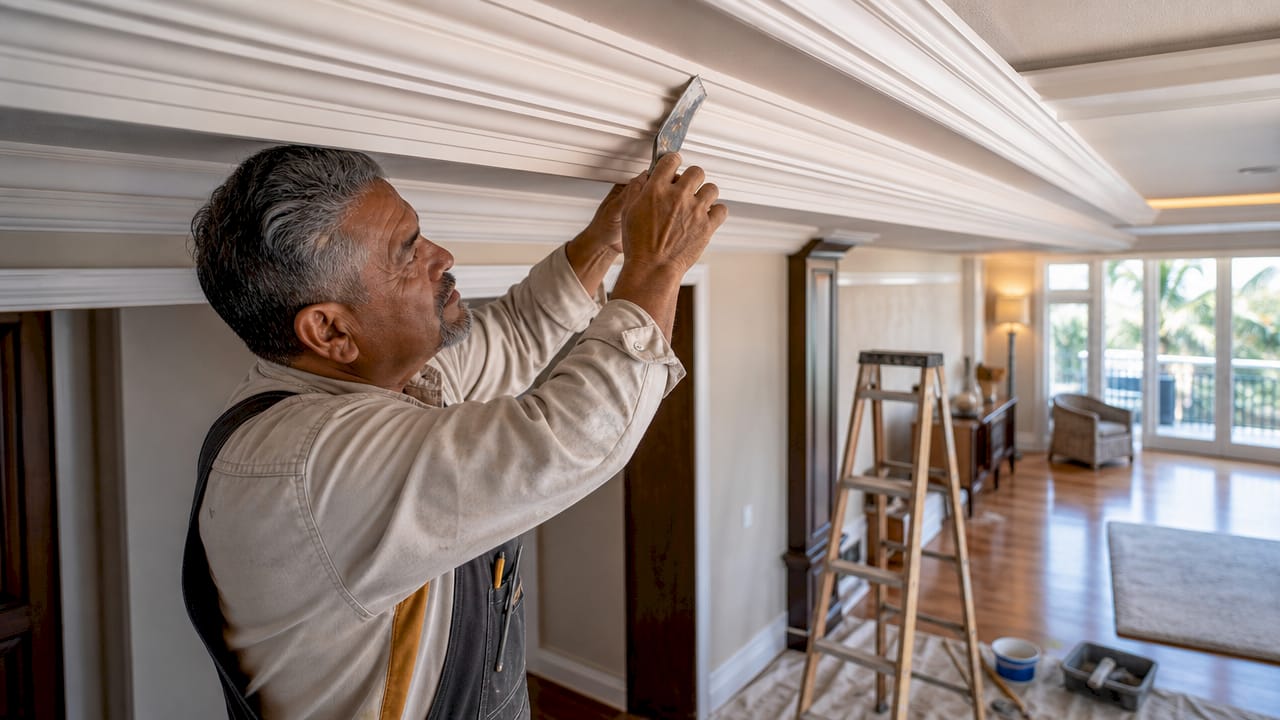
The lifecycle cost perspective separates VE from reactive budget trimming. A cheaper roofing material that requires replacement in 12 years instead of 30 is not a saving. It is a deferred expense with compounding maintenance liability. Value engineering accounts for total cost of ownership, not just the line item on the initial bid.
The key differences between cost-cutting and value engineering are worth stating clearly:
- Cost-cutting reduces scope, quality, or features to meet a number.
- Value engineering reallocates budget from low-impact elements to high-impact systems.
- Cost-cutting is reactive, typically triggered by a budget overrun.
- Value engineering is proactive, applied during design before costs are locked in.
- Cost-cutting often creates long-term maintenance liabilities.
- Value engineering reduces lifecycle costs while protecting structural integrity.
How to value engineer a luxury home: phases and strategies
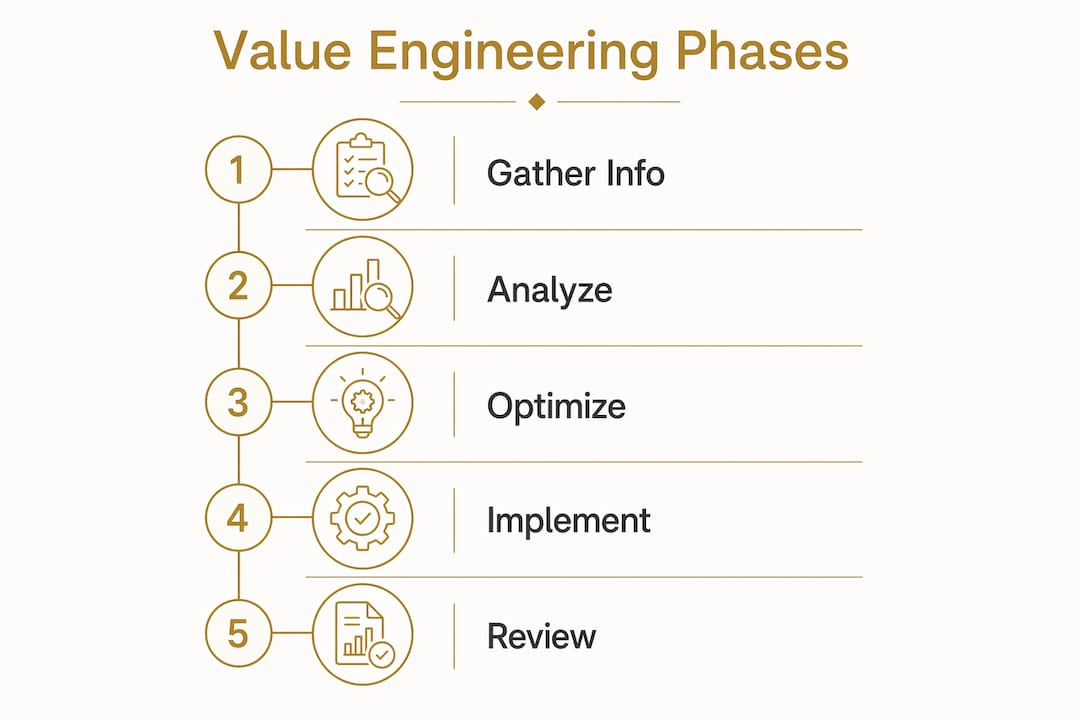
Value engineering follows six defined phases: information gathering, brainstorming, evaluation, plan development, presentation, and implementation. Each phase builds on the last, and skipping any one of them typically produces incomplete results.
- Information gathering. The team documents every design element, its cost, and its functional purpose. Nothing is assumed. A line item that cannot be justified by function is flagged immediately.
- Brainstorming. Architects, engineers, and builders generate alternatives for flagged elements. The goal is volume of ideas, not immediate judgment. A material substitution, a simplified roofline, a reduced floor plan area: all go on the table.
- Evaluation. Each alternative is assessed against the original on function, aesthetics, durability, and total cost. Alternatives that compromise structural performance or the home’s defining luxury features are eliminated.
- Plan development. Surviving alternatives are developed into detailed specifications. Cost savings are calculated with precision, not estimates.
- Presentation. The homeowner reviews the recommendations with full transparency. Every trade-off is explained. No change is made without informed approval.
- Implementation. Approved changes are integrated into construction documents before work begins.
Timing is the single most critical variable in this process. Early-stage VE during schematic and design development yields the highest return. Late-stage changes, made after designs are finalized and permits are pulled, cost five to ten times more to implement. The window for maximum impact is narrow, and it closes fast.
Pro Tip: Categorize every project component as either “must-invest” or “optimizable” before the design development phase ends. Must-invest items include foundation, framing, envelope, and mechanical systems. Optimizable items include decorative finishes, secondary bathroom materials, and architectural complexity in low-visibility areas.
| Phase | Timing | Primary Focus |
|---|---|---|
| Information gathering | Pre-design | Document all elements and costs |
| Brainstorming | Schematic design | Generate alternatives |
| Evaluation | Design development | Assess function vs. cost |
| Plan development | Design development | Specify approved alternatives |
| Presentation | Pre-permit | Homeowner review and approval |
| Implementation | Pre-construction | Integrate into construction documents |
Real examples of cost-effective luxury design that preserve quality
Concrete examples make value engineering tangible. The savings are real, and the quality trade-offs, when VE is done correctly, are negligible.
- Floor plan reduction. Reducing a floor plan by 400 square feet saves $115,000 to $180,000 in construction cost. The key is identifying which square footage adds livable value and which adds only complexity and maintenance. A rarely used formal dining room adjacent to a great room is a common candidate.
- Material substitution in secondary spaces. Substituting natural stone with high-end porcelain in secondary bathrooms saves $6,000 to $18,000 per unit. Modern large-format porcelain is visually indistinguishable from natural stone in most secondary applications. The primary bathroom, the one that defines the home’s luxury standard, retains the natural material.
- Architectural simplification. Reducing roofline angles and eliminating unnecessary inside corners saves $8,000 to $25,000 per modification. Complex rooflines add framing labor, material waste, and long-term leak risk. A cleaner roofline is not a compromise. It is a more durable, lower-maintenance design.
- Phase deferral. Non-critical elements such as a pool house, a secondary garage, or a landscaping feature can be designed into the project and built in a later phase. The infrastructure is roughed in during primary construction, preserving the vision while reducing immediate capital outlay.
| Modification | Estimated Savings | Quality Impact |
|---|---|---|
| 400 sq ft floor plan reduction | $115,000–$180,000 | None if low-use areas targeted |
| Porcelain vs. stone in secondary baths | $6,000–$18,000 per unit | Minimal, visually comparable |
| Roofline simplification | $8,000–$25,000 per change | Positive: reduces maintenance risk |
| Phase deferral of non-critical features | Variable | None: vision preserved |
The pattern across all these examples is consistent. Protecting structural and mechanical systems while optimizing finishes and architectural complexity produces savings without touching the elements that define the home’s quality and longevity. For homeowners working with luxury builders in Los Angeles, this framework applies directly to the complex, high-value projects that define the market.
Common misconceptions about luxury home value engineering
The most damaging misconception is that value engineering is something you do when a project goes over budget. By that point, the opportunity is largely gone. Late-stage VE changes cost five to ten times more to implement than early-stage ones, and the options available are far more limited. VE applied after design finalization is not value engineering. It is damage control.
A second misconception conflates value engineering with value management. Value management is a broader strategic process concerned with organizational goals and stakeholder priorities. Value engineering is a specific, technical discipline focused on the function-to-cost relationship of individual project components. The two are related but not interchangeable.
Emotional decision-making is the third and most personal pitfall. Luxury home design is inherently personal, and homeowners naturally attach significance to specific materials, features, and design choices. Value engineering provides an objective framework that separates emotional preference from functional necessity. The goal is not to eliminate personal expression. It is to ensure that personal expression is funded by reallocated savings, not by overspending on elements that deliver no proportional return.
Pro Tip: When a design element feels non-negotiable, ask one question: does it affect structural performance, daily livability, or the home’s defining aesthetic? If the answer is no to all three, it is a candidate for optimization regardless of how much you love it.
Early collaboration among architects, engineers, and builders is the single most effective way to avoid all three pitfalls. When the full team is aligned on VE principles before schematic design begins, the process runs with far less friction and far better outcomes. Exploring how to budget a refurbishment with the same discipline applied to new construction produces comparable results in renovation projects.
Key Takeaways
Value engineering in luxury homes delivers 10–25% cost savings by protecting structural systems and selectively optimizing finishes, materials, and architectural complexity during the design phase.
| Point | Details |
|---|---|
| Apply VE early | Schematic and design development phases offer the highest savings with the lowest implementation cost. |
| Protect structural systems | Foundation, framing, envelope, and mechanical systems are must-invest categories, not candidates for optimization. |
| Optimize secondary finishes | Material substitutions in secondary spaces and architectural simplification yield significant savings with minimal aesthetic impact. |
| Avoid late-stage changes | Changes after design finalization cost five to ten times more and offer far fewer options. |
| Use objective frameworks | Separating emotional preference from functional necessity produces better decisions and more predictable project outcomes. |
Why I think most homeowners misunderstand value engineering entirely
Most homeowners hear “value engineering” and picture a builder trying to talk them out of the features they want. That framing is exactly backwards. The builders who practice VE well are the ones who protect your vision most aggressively, because they are directing your budget toward the elements that actually deliver it.
I have seen projects where a homeowner spent $60,000 on a decorative ceiling in a room they use twice a year, then had to cut the mechanical system upgrade that would have made the home genuinely comfortable to live in. That is not a luxury home. That is an expensive one. The distinction matters.
The most effective VE conversations I have been part of happen before a single drawing is finalized. When the architect, structural engineer, and builder are in the same room early, the trade-offs are visible before they are expensive. A roofline that looks beautiful on a rendering but adds $22,000 in framing complexity and creates three future leak points is a problem you want to solve on paper, not on a scaffold.
Value engineering as capital allocation is the framing that changes everything. You are not cutting your home down. You are deciding where your investment produces the most return, in durability, in livability, in long-term maintenance costs, and in the features that genuinely define the home as yours. That is a more sophisticated way to build, and it produces better homes.
The homeowners who resist VE early almost always wish they had embraced it. The ones who engage with it from the start tend to end up with more of what they actually wanted, built better, and completed closer to their original budget.
— Daniel
How Builtblackbriar integrates value engineering into every luxury build
Builtblackbriar brings value engineering into the process from the first client conversation, not as a budget correction but as a design discipline. Every project begins with a detailed component analysis that separates must-invest systems from optimizable elements, giving homeowners a clear picture of where their budget produces the most return.
For homeowners and investors building in Los Angeles, Builtblackbriar’s luxury home building services combine transparent budgeting, real-time project collaboration, and deep expertise in complex builds including subterranean basements and large-scale glass installations. The result is a project that stays on budget, on schedule, and fully aligned with the original vision. If you are planning a luxury build or major renovation, connect with the Builtblackbriar team to see how value engineering can work for your specific project.
FAQ
What is value engineering in luxury homes?
Value engineering in luxury homes is the process of maximizing a home’s function-to-cost ratio by protecting structural and performance-critical systems while selectively optimizing finishes, materials, and architectural complexity. Applied early, it reduces construction costs by 10–25% without compromising quality or aesthetics.
When should value engineering be applied in a home project?
Value engineering produces the best results during the schematic and design development phases, before designs are finalized. Late-stage changes cost five to ten times more to implement and offer significantly fewer options.
Does value engineering reduce the quality of a luxury home?
Value engineering does not reduce quality when applied correctly. It protects structural and mechanical systems as non-negotiable investments while optimizing secondary finishes and replaceable elements that do not affect the home’s performance or defining aesthetic.
What are the biggest savings from value engineering a luxury home?
Reducing a floor plan by 400 square feet saves $115,000 to $180,000. Simplifying roofline angles saves $8,000 to $25,000 per modification, and substituting porcelain for natural stone in secondary bathrooms saves $6,000 to $18,000 per unit.
How is value engineering different from cost-cutting?
Value engineering is proactive and function-focused, applied during design to reallocate budget toward high-impact systems. Cost-cutting is reactive, typically triggered by a budget overrun, and often reduces scope or quality to meet a number.