

June 8, 2026
What Are High-End Home Finishes? A Luxury Guide
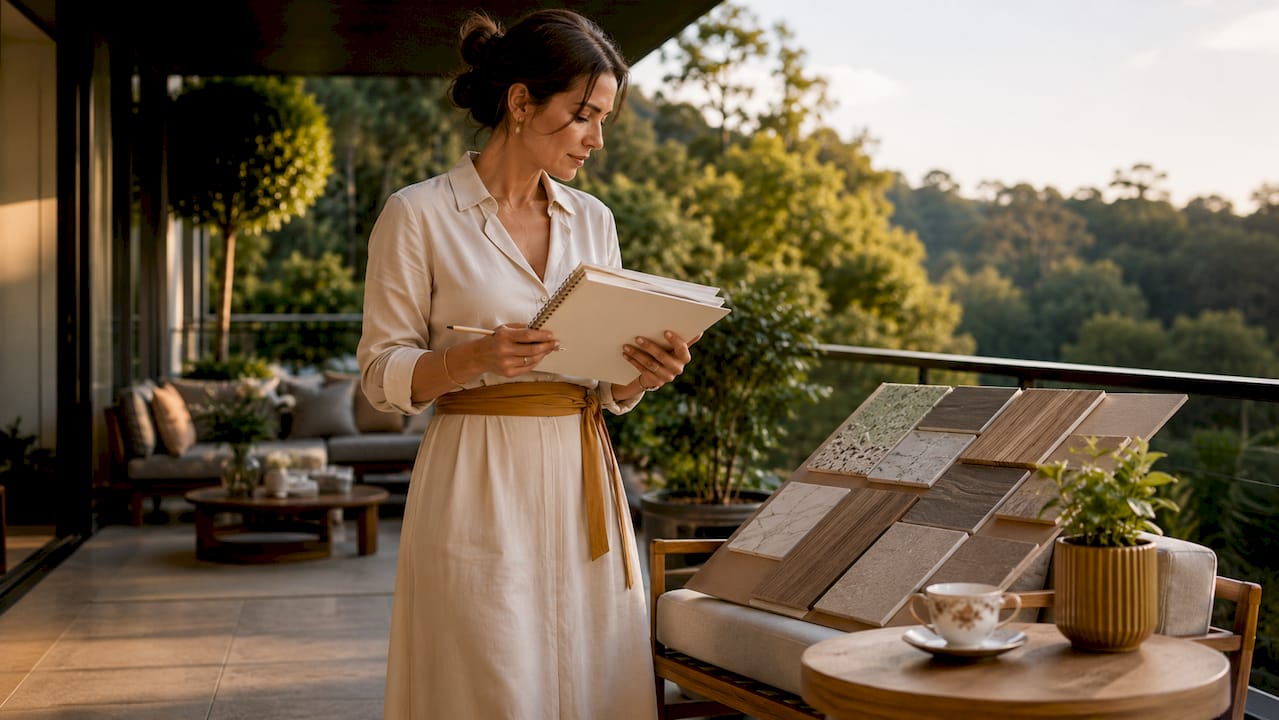
High-end home finishes are the premium materials, surfaces, and design details that define a residence’s quality, durability, and aesthetic character at every point of contact. They span everything from wide-plank white oak floors and bookmatched marble countertops to custom bronze hardware and Venetian plaster walls. In luxury construction, these finishes are not decorative afterthoughts. They are structural decisions that shape how a home performs, ages, and holds value across decades. This guide breaks down the types, the selection logic, and the investment principles that separate truly refined interiors from expensive ones that simply look the part on move-in day.
What are high-end home finishes and how are they defined?
High-end home finishes, known in the design and construction industry as premium interior finishes or luxury specification materials, are surfaces and fixtures selected for superior material quality, skilled fabrication, and long-term performance rather than cost alone. They appear in flooring, countertops, cabinetry, wall treatments, hardware, and lighting. What separates them from standard finishes is not price per square foot but the combination of material authenticity, execution precision, and lifecycle durability.
Interior finishes and custom cabinetry typically represent 25% to 35% of total construction cost in high-end custom homes, with kitchens and primary suites commanding the largest share. That proportion reflects how central these decisions are to the overall build. A home can have an extraordinary structural shell and still feel hollow if the finishes are poorly specified or carelessly installed.
The materials most associated with this category include natural stones such as granite, marble, and quartzite; site-finished hardwoods like white oak and walnut; custom millwork and cabinetry; artisan wall treatments including Venetian plaster and clay plaster; and hardware in unlacquered brass, oil-rubbed bronze, or hand-forged iron. Each of these materials carries a distinct character that mass-produced alternatives cannot replicate.
What types of high-end finishes define a luxury interior?
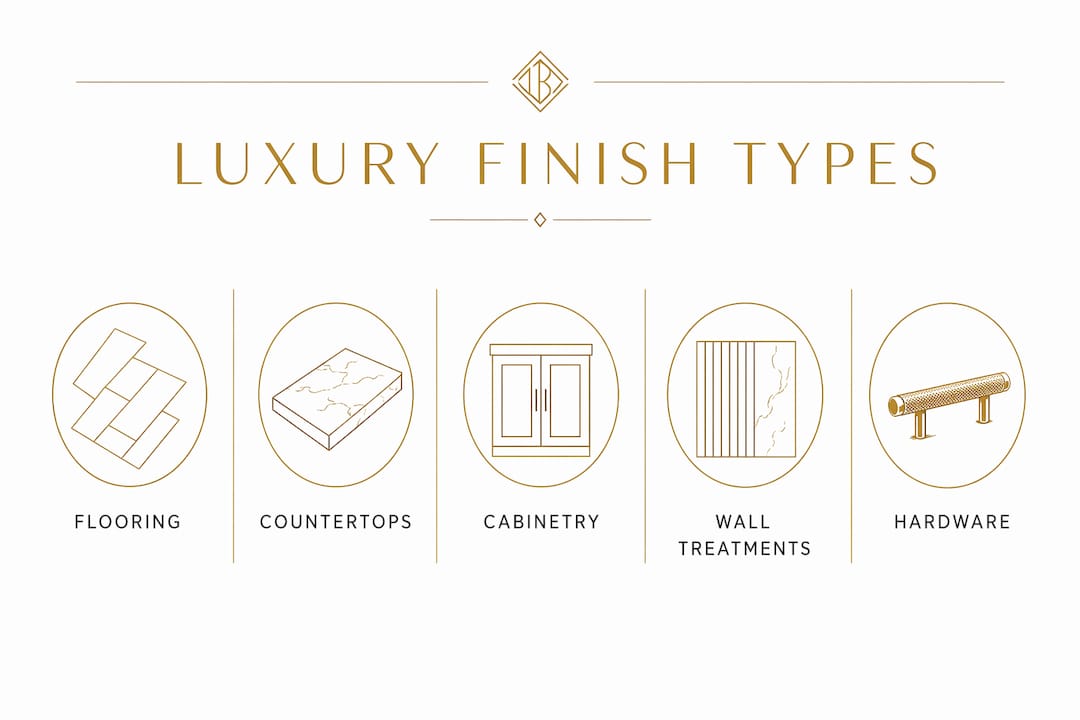
The categories below represent the primary finish types found in luxury residential projects. Each carries its own material logic, installation demands, and design impact.
Flooring
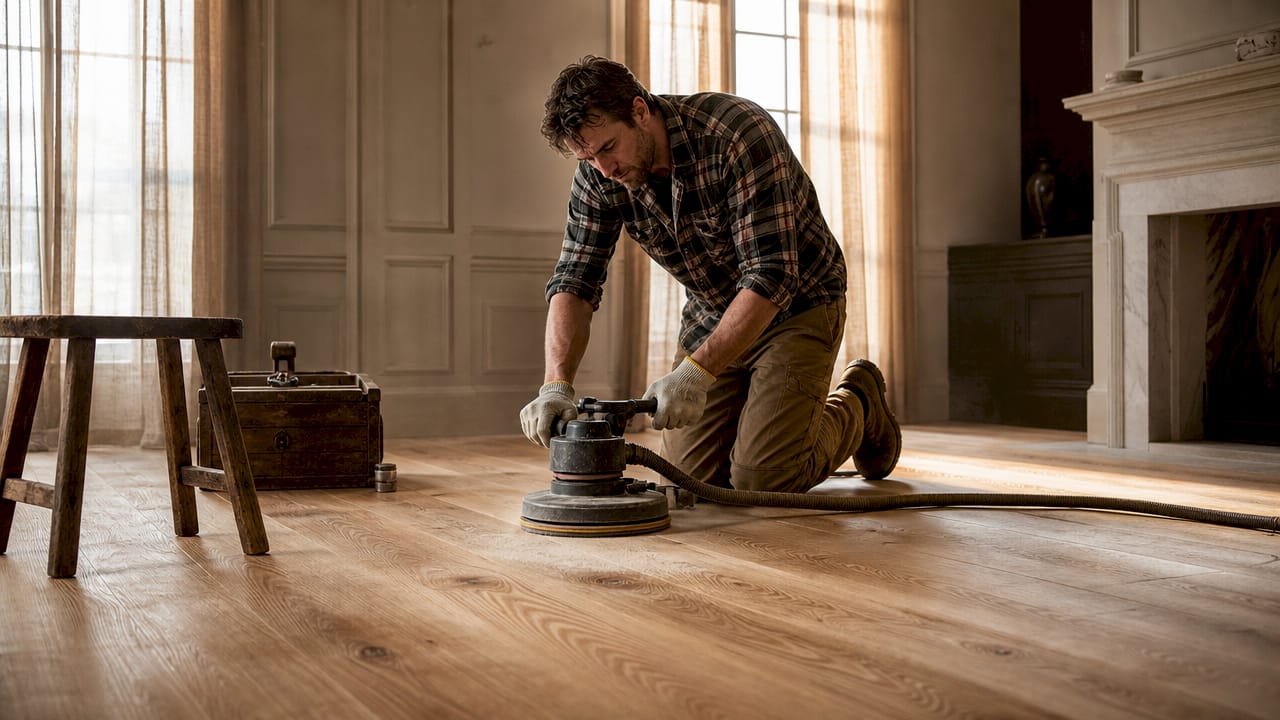
Wide-plank site-finished white oak floors are the benchmark in luxury builds because they set the tone for light, acoustics, and spatial flow across the entire home. Site-finished means the floor is sanded and sealed after installation, producing a continuous surface without factory-applied coatings that can peel or yellow. Exotic species like teak, rift-sawn walnut, and reclaimed heart pine offer additional character for clients seeking something less common.
Countertops and stone surfaces
Natural stones, particularly marble, quartzite, and granite, remain the dominant choice for countertops, waterfall islands, and bathroom vanities in luxury homes. Quartzite offers the visual warmth of marble with greater resistance to etching, making it a practical choice for high-use kitchen surfaces. Bookmatched stone (where two mirrored slabs are opened like a book to create a symmetrical pattern) is one of the most visually arresting applications in contemporary luxury design.
Cabinetry and millwork
Custom cabinetry is architectural at hand level, meaning it defines the visual order and tactile experience of a room more than almost any other element. Fine millwork with flush reveals, integrated hardware, and precisely aligned grain patterns signals craftsmanship immediately. Poor build quality in cabinetry, regardless of the wood species used, makes expensive homes feel hollow within a few years of occupancy.
Wall treatments
Venetian and clay plaster provide luminous depth that paint cannot achieve, but they require skilled artisans and near-perfect substrates. Glossy finishes in particular amplify every surface imperfection, so the quality of the underlying wall preparation is as important as the finish itself. Artisanal paint finishes, limewash, and hand-applied texture treatments are gaining ground in Los Angeles luxury builds as alternatives to wallcovering.
Hardware and fixtures
Premium hardware in unlacquered brass, brushed nickel, or matte black functions as jewelry for the home. Fixtures from makers like Waterworks, Rocky Mountain Hardware, and Lefroy Brooks are specified in high-end projects because their weight, finish consistency, and mechanical precision outlast mass-market alternatives by decades.
| Finish Category | Premium Material Examples | Key Benefit |
|---|---|---|
| Flooring | Site-finished white oak, reclaimed teak | Renewable, refinishable over generations |
| Countertops | Bookmatched marble, quartzite | Unique veining, long-term durability |
| Cabinetry | Custom hardwood millwork, lacquered MDF | Architectural precision, bespoke fit |
| Wall treatments | Venetian plaster, limewash | Depth, texture, and light interaction |
| Hardware | Unlacquered brass, hand-forged iron | Patina development, mechanical longevity |
How do material selection and craftsmanship affect long-term value?
The lifecycle argument for premium finishing options is straightforward. Site-finished hardwood floors can be sanded and refinished five to six times over their life, delivering value across 75 to 100 years of use. A pre-finished engineered floor, by contrast, typically has a wear layer too thin to refinish more than once. The upfront cost difference between the two narrows considerably when measured over 25 years.
Execution quality is where many luxury projects fall short despite high material budgets. Aligned grout lines, continuous slab grain flow across seams, flush baseboards, and precisely fitted millwork are the details that separate a genuinely high-end interior from one that merely uses expensive materials. A poorly installed marble floor with inconsistent grout spacing reads as low-quality regardless of the stone’s origin or cost.
The patina principle is one of the most underappreciated concepts in luxury finish selection. High-end finishes that develop patina add intrinsic value and character over time, unlike finishes that look their best only on installation day. Unlacquered brass darkens and develops depth. Aged leather improves with use. Oiled hardwood floors grow richer with each passing year. Selecting materials that age gracefully is a fundamentally different design philosophy than selecting materials that resist change.
Pro Tip: Reserve heritage-grade materials, such as hand-selected marble slabs and site-finished hardwoods, for primary social zones like the kitchen, entry, and main living areas. Use high-performance alternatives in utility spaces and secondary bedrooms to concentrate your investment where it generates the most visual and experiential return.
What are the latest trends in luxury home finishes?
The defining shift in high-end residential design over the past several years is the move toward distinction over abundance. Clients are no longer specifying luxury by volume. They are specifying it through singular, bespoke elements that could not exist in any other home.
The most prominent trends currently shaping the premium finishing options market include:
- Matte and satin lacquered surfaces on cabinetry and millwork, replacing the high-gloss finishes that dominated the previous decade. Matte surfaces read as quieter and more refined in natural light.
- Warm metal accents in brushed gold, aged bronze, and unlacquered brass across plumbing fixtures, door hardware, and light fixtures. These metals develop character rather than showing wear.
- Integrated lighting within millwork, where LED strips are concealed inside cabinetry reveals, toe kicks, and ceiling coffers to create ambient depth without visible fixtures.
- Rare and figured woods such as olive ash burl, smoked eucalyptus, and book-matched walnut for feature walls, vanities, and custom furniture pieces that function as art.
- Custom murals and hand-applied wall textures that replace wallpaper as the primary tool for creating rooms with a distinct identity.
The common thread across all of these trends is personalization. The most compelling luxury interiors being built in Los Angeles right now are ones where the finish palette could not be lifted and placed into another home without losing its meaning.
How to strategically choose and integrate finishes into your luxury home
The single most consequential decision in finish selection is timing. Interior finishes must be decided before construction begins to avoid costly change orders, schedule delays, and compromised quality. Material choices dictate structural, mechanical, and lighting requirements. A stone slab waterfall island, for example, requires specific substrate preparation and structural support that must be planned before framing is complete.
A strategic approach to choosing finishes for a luxury home follows this sequence:
- Establish the material hierarchy early. Identify which spaces receive heritage-grade materials and which receive high-performance alternatives. This decision shapes the entire budget and procurement timeline.
- Select stone slabs in person. Natural stone is inherently variable. Two slabs from the same quarry can look dramatically different. Visiting a stone yard to hand-select slabs for bookmatching or specific veining is not optional in a high-end project.
- Coordinate finishes with lighting design. The color temperature and direction of light changes how every finish reads in a space. Venetian plaster under warm incandescent light looks entirely different than under cool daylight LEDs.
- Specify hardware and fixtures before rough-in. Plumbing rough-in locations, electrical box placements, and cabinet hardware drilling patterns must align with the specified products. Last-minute hardware changes are among the most common sources of costly rework.
- Vet fabricators and installers as carefully as materials. The finest marble slab installed by an inexperienced fabricator will underperform a mid-grade stone installed by a master craftsman. Execution is the multiplier on material quality.
Pro Tip: Work with builders and designers who treat finish selection as a design discipline, not a procurement task. The difference shows in every aligned reveal, every flush transition, and every detail that you notice without knowing why the room feels right.
Key takeaways
High-end home finishes deliver lasting value through the combination of authentic materials, skilled execution, and early integration into the design and construction process.
| Point | Details |
|---|---|
| Define finishes early | Material decisions must precede construction to avoid costly changes and structural conflicts. |
| Prioritize execution quality | Precise installation separates true luxury from expensive materials poorly applied. |
| Select for patina, not perfection | Materials that age gracefully, like unlacquered brass and oiled hardwood, gain value over time. |
| Concentrate investment strategically | Reserve heritage-grade materials for high-use, high-visibility spaces like kitchens and entries. |
| Bespoke over abundant | Singular, custom elements define luxury more effectively than volume of expensive materials. |
What I’ve learned about finishes after years of luxury builds
Working on high-end residential projects in Los Angeles has taught me one thing above all others: the homes that hold their quality and their owners’ affection longest are the ones where someone made hard decisions early and held to them. The temptation to defer finish selections, to treat them as something you figure out once the walls are up, is where most luxury projects quietly lose their edge.
The details that separate a genuinely extraordinary home from a merely expensive one are almost never the headline materials. They are the 3mm reveal on a cabinet door that aligns perfectly with the adjacent wall panel. They are the way a marble threshold transitions to hardwood without a visible height change. They are the weight of a door handle that tells your hand, before your eye registers anything, that this is a well-built place.
Luxury lives in layers including material cost, fabrication complexity, freight, specialty installation, and field coordination. That layered reality is why the true cost of premium finishes consistently surprises clients who have only looked at material price per square foot. Understanding that full picture before you commit to a finish palette is the difference between a project that lands on budget and one that requires painful compromises in the final stretch.
My honest recommendation: invest in timeless materials with proven aging characteristics, specify them in the spaces where you spend the most time, and find a builder whose team treats installation precision as a point of professional pride. The rest follows.
— Daniel
Build your vision with Builtblackbriar
Builtblackbriar brings the same precision to finish integration that it applies to every phase of a luxury build. Working with high-end clients across Los Angeles, the Builtblackbriar team coordinates material selection, stone sourcing, custom millwork, and hardware specification from the earliest design stages, so nothing is left to last-minute decisions. Their technology-driven project management keeps clients informed and involved at every step, from slab selection trips to final installation sign-off. If you are planning a luxury home and want a builder who treats craftsmanship as a non-negotiable standard, explore Builtblackbriar’s luxury home building expertise and see what genuine finish quality looks like in practice.
FAQ
What defines a finish as high-end in residential construction?
A finish is considered high-end when it combines authentic material quality, skilled fabrication, and long-term performance. The standard industry definition emphasizes lifecycle durability and execution precision, not price alone.
How much of a luxury home’s budget goes toward finishes?
Interior finishes and cabinetry typically represent 25% to 35% of total construction cost in high-end custom homes, with kitchens and primary suites absorbing the largest portion of that investment.
What are the most durable high-end flooring options?
Site-finished hardwoods like white oak and walnut are the most durable premium flooring options because they can be sanded and refinished five to six times over their lifespan, making them a multi-generational investment.
When should finish selections be made during a luxury build?
Finish selections must be finalized before construction begins. Material choices determine structural, mechanical, and lighting requirements that cannot be easily changed once framing and rough-in work are underway.
What is the current direction in luxury finish design?
The dominant trend is distinction over abundance, favoring singular bespoke elements like custom bronze hardware and bookmatched stone over simply specifying expensive materials throughout every surface.