

May 25, 2026
What Is a Design-Build Firm? A Homeowner’s Guide
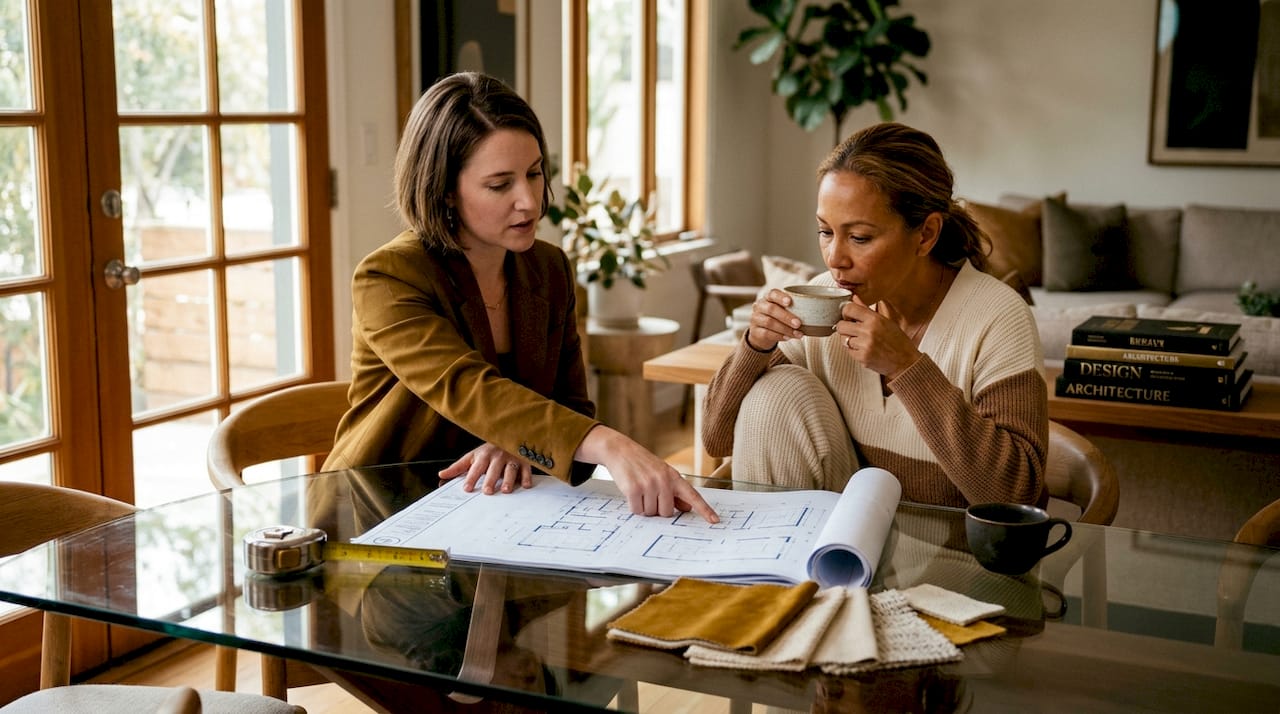
Most homeowners assume building or renovating a home means hiring an architect first, then finding a contractor, then spending months watching those two argue over cost overruns and blame. That model is common. It is also the source of most construction nightmares. A design-build firm changes the equation entirely by uniting both disciplines under a single contract, one team, and one line of accountability. Understanding what a design-build firm does and how to choose the right one could be the most consequential decision you make before breaking ground.
Table of Contents
- Key takeaways
- What is a design-build firm, exactly?
- How the design-build process works
- Benefits of design-build firms for homeowners
- Choosing between design-build firm types
- A perspective worth sharing
- Build something lasting with Builtblackbriar
- FAQ
Key takeaways
| Point | Details |
|---|---|
| Single contract model | A design-build firm combines design and construction under one contract, eliminating divided accountability. |
| Schedule compression | Overlapping design and construction phases delivers projects faster than traditional sequential methods. |
| Fewer budget surprises | Early design-construction coordination reduces costly change orders before work begins on site. |
| Two firm philosophies | Architect-led firms prioritize aesthetics while contractor-led firms focus on budget and logistics. |
| True integration matters | Firms that subcontract design services lack the cohesion that makes design-build genuinely advantageous. |
What is a design-build firm, exactly?
At its core, a design-build firm is a single entity holding one contract that covers both the design and construction of your project. You sign one agreement, work with one team, and hold one party responsible for everything from the initial floor plan to the final walk-through. That structural difference from traditional project delivery is more significant than it first appears.
In traditional construction, you hire an architect, who produces drawings, and then you hire a general contractor separately to build from those drawings. If the roof detail is unbuildable, or the kitchen layout conflicts with structural requirements, the architect and contractor debate who owns the problem while your project stalls and your budget climbs. The homeowner gets caught in the middle, playing referee between two firms with different financial incentives.
Design-build firms dissolve that dynamic entirely. A genuine design-build firm integrates architectural, engineering, and construction teams from day one. They share meetings, share responsibility, and share the goal of delivering your project on time and on budget. One firm coordinating all design and construction disciplines removes the structural gap that causes so many traditional projects to fracture.
The services a design-build firm typically provides include:
- Pre-design feasibility and site analysis
- Architectural design and interior planning
- Engineering (structural, MEP, civil)
- Permitting and regulatory approvals
- Full construction management and field supervision
- Post-construction documentation and handover
That scope, delivered by one team, is what separates a design-build firm from a contractor who happens to offer a drafting service on the side.
How the design-build process works
Understanding what does a design-build firm do in practice means walking through the project phases and seeing how integration shows up at each step.
-
Pre-design and feasibility. Before a single line is drawn, the team assesses your site, reviews zoning requirements, and produces a realistic budget range. This early collaboration means your design aspirations are grounded in what is actually buildable on your specific lot. No surprises after construction documents are halfway finished.
-
Schematic and design development. Architects and builders work in parallel, not in sequence. As the design takes shape, construction estimators are already reviewing it for cost and constructability. Many firms use Building Information Modeling (BIM) at this stage, a 3D digital coordination tool that detects clashes between structural, mechanical, and architectural systems before they appear on site.
-
Permitted construction. Because design and construction teams share information daily, the firm can begin long-lead material procurement and site preparation while final permits are still processing. This schedule compression is one of the defining advantages of the model, reducing total project timelines meaningfully compared to traditional sequential delivery.
-
Onsite construction and quality control. The same team that designed the project supervises its execution. When a field condition changes (as it always does in custom homes), the design and construction leads resolve it together, in hours rather than weeks.
-
Closeout and handover. The project team consolidates all permits, warranties, as-built drawings, and maintenance documentation into a single handover package. Simplified post-construction documentation eases your transition into the finished home and simplifies future maintenance planning.
Pro Tip: Ask any prospective design-build firm to show you a sample BIM coordination report from a previous project. A firm that uses BIM actively will have one ready. A firm that does not may be overstating its integration capabilities.
Benefits of design-build firms for homeowners
The practical advantages of design-build firms explained through real project outcomes tell a compelling story for homeowners considering custom builds or substantial renovations.
Fewer communication errors between design and construction teams translate directly into fewer costly mistakes on site. When the architect, structural engineer, and site superintendent are part of the same firm and meet weekly, design intent survives the translation to construction far more reliably than in a fragmented model. Owners experience greater satisfaction and face a significantly reduced risk of disputes.
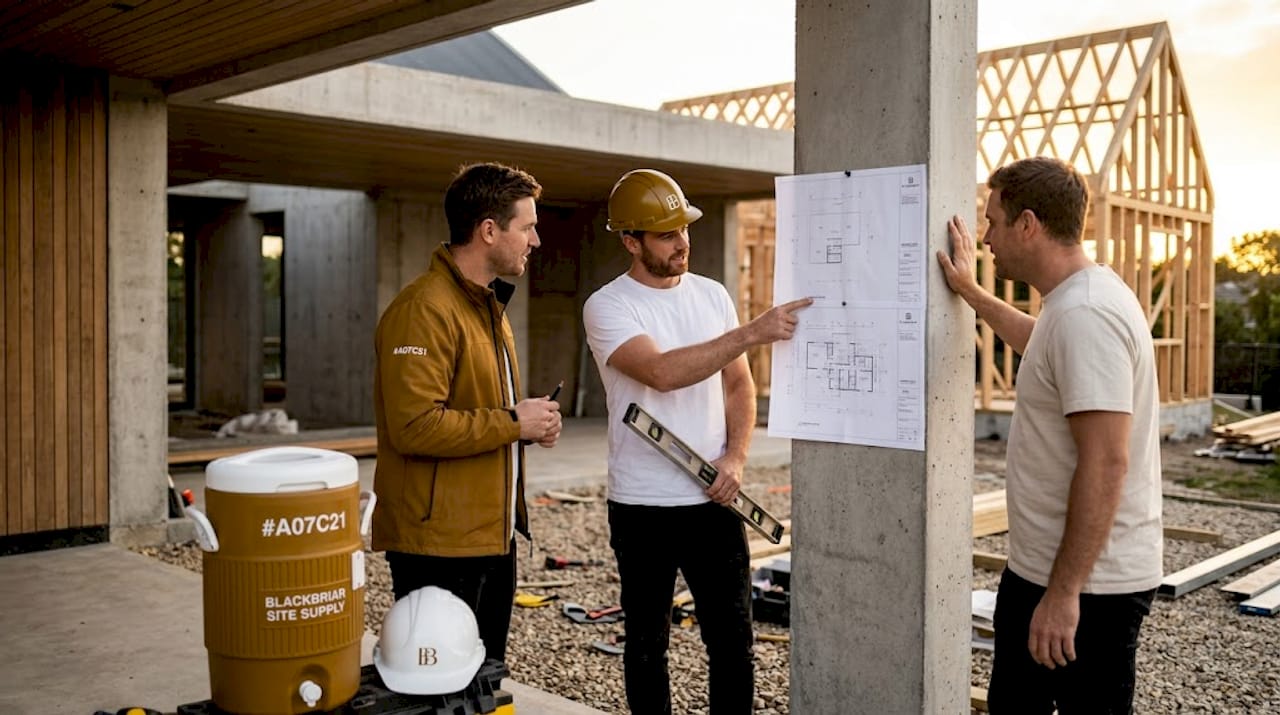
The budget benefits are concrete. Design-build reduces change orders because design decisions are vetted for construction feasibility before work starts. The expensive surprises that appear after foundation pours in traditional projects, the ones that cascade into drawn-out negotiations and blown contingencies, are identified and resolved during design instead.
Consider the advantages for a typical custom home project:
- Single point of contact. One project lead manages design, permitting, and construction. You are never caught between competing teams.
- Budget certainty. Constructability reviews during design catch conflicts before they become expensive field conditions.
- Faster completion. Overlapping phases compress the overall schedule, getting you into your home sooner.
- Integrated quality control. The designers who specified your finishes oversee their installation, catching deviations immediately.
- Eliminated adversarial dynamics. There is no incentive for designers and builders to blame each other because they share one contract and one outcome.
For homeowners building in complex environments (think hillside lots in Los Angeles, subterranean additions, or large-format glass curtain walls), the collaboration advantage of a design-build firm is especially pronounced. These are precisely the conditions where design and construction coordination failures are most expensive.
Choosing between design-build firm types
Not all design-build firms work the same way, and matching firm philosophy with project priorities is one of the most overlooked decisions in the selection process.
Industry analysis identifies two dominant models: design-forward firms, typically led by licensed architects, and construction-forward firms, typically led by experienced general contractors. Each brings a genuinely different orientation to your project.
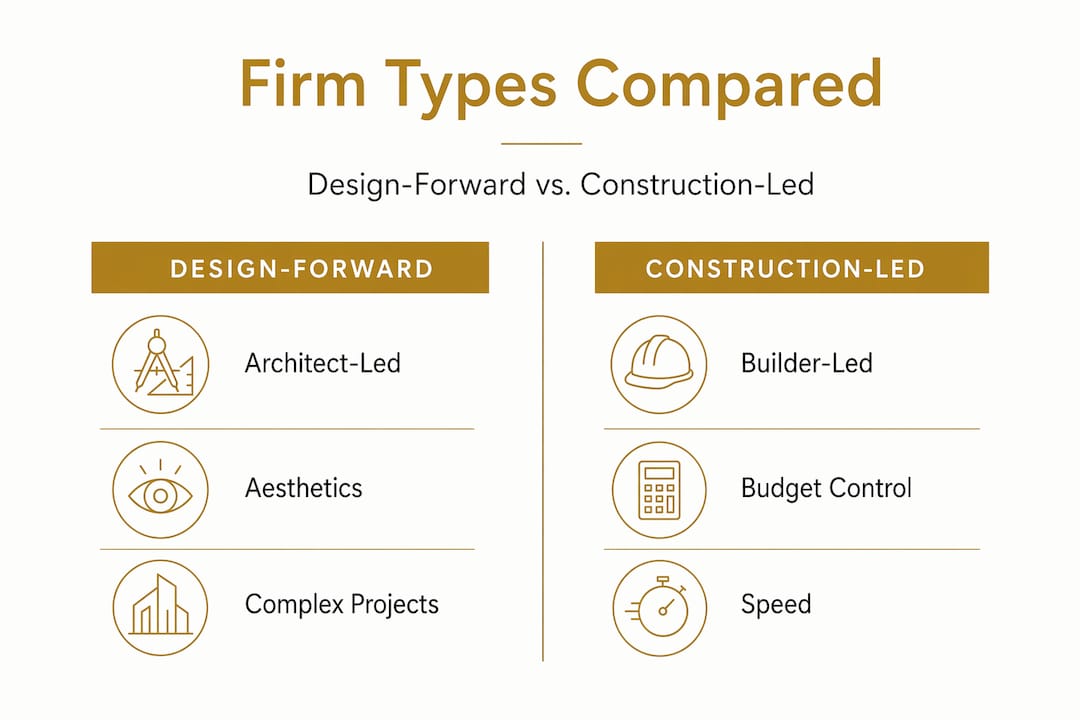
| Firm Type | Leadership | Primary Focus | Best For |
|---|---|---|---|
| Design-forward | Architect-led | Aesthetics, spatial quality, material innovation | Projects where design vision is the priority |
| Construction-forward | GC-led | Budget, schedule, logistical complexity | Projects where cost control and delivery timeline are paramount |
The choice is not about which type is better overall. It is about which type matches what you actually value most. If you are building a showcase home where every detail is an expression of personal vision, an architect-led firm will likely serve you better. If you are completing a complex structural addition on a tight timeline, a contractor-led firm with strong design talent may be the wiser call.
One critical nuance: some firms subcontract design services rather than maintaining architects and engineers in-house. This arrangement weakens the integration that makes design-build valuable. The communication between a subcontracted design firm and a construction team is still prone to the information gaps and misaligned incentives that design-build is supposed to solve. Ask directly: are your architects and engineers employees of this firm, or are they subcontracted? Genuine firms have all disciplines collaborating closely from inception.
Pro Tip: During interviews, ask the firm to describe a recent project where a design decision had to change in the field due to a site condition. How they answer tells you everything about whether their design and construction teams actually work together or merely tolerate each other.
A perspective worth sharing
I have worked closely with luxury homeowners and project teams across complex builds, and the pattern I see repeatedly is this: homeowners choose a design-build firm for the right reasons (efficiency, accountability) but evaluate firms on the wrong criteria (portfolio aesthetics and quoted price).
What I have found actually determines project success is the depth of internal integration. A firm where the lead architect and lead superintendent have worked together for five years on twenty projects is an entirely different animal from a firm where design is handled by a rented studio that emails drawings over a shared platform. The first arrangement means your project benefits from thousands of hours of accumulated coordination intuition. The second means you get a unified invoice with a fragmented process underneath it.
The cost savings from early collaboration are real, but they are only available to homeowners who ask hard questions upfront. I have watched clients choose a cheaper design-build firm, only to find that the “design-build” label masked a traditional general contractor who sends drawings out to a freelance architect. The change orders come anyway. The disputes come anyway. The only thing that changed was the contract format.
What many homeowners miss is that design-build is a philosophy before it is a contract. When the team genuinely shares the goal of building something beautiful, on time, and within your actual budget, the process feels collaborative rather than adversarial. That feeling is not incidental. It is a direct result of how the firm is structured and how its people work together every single day.
— Daniel
Build something lasting with Builtblackbriar

Builtblackbriar brings exactly this level of genuine integration to luxury home projects across Los Angeles. Their in-house team of designers, engineers, and construction specialists works under one roof, sharing real-time project data and weekly coordination meetings to keep every build on schedule and on budget. For homeowners considering a custom build or significant renovation in high-demand locations, their luxury home building services in Westlake represent the design-build model at its most refined. Builtblackbriar also serves Westchester homeowners with the same transparent, technology-supported process. Whether your project involves a subterranean basement, oversized structural glass, or a full custom home, explore Blackbriar’s full services to see how integrated design-build delivers results that traditional approaches rarely match. Contact the team directly to schedule your initial consultation.
FAQ
What is the main difference between design-build and traditional construction?
In traditional construction, you hire an architect and contractor separately under different contracts, creating divided accountability. A design-build firm covers both under a single contract, so one team owns the outcome from design through delivery.
How does a design-build firm help control my budget?
Design and construction teams collaborate before work starts, catching conflicts between design intent and budget reality early. This eliminates most of the change orders that cause cost overruns in traditional projects.
Are all design-build firms truly integrated?
No. Some firms use the design-build label but subcontract their design services, which recreates the communication gaps the model is meant to solve. Ask directly whether architects and engineers are in-house staff or external contractors.
How do I choose the right design-build firm for my project?
Identify whether your priority is design quality or budget and schedule control, then match that priority to an architect-led or contractor-led firm accordingly. Verify that the firm’s design and construction teams work together daily on the same projects.
What types of projects benefit most from design-build firms?
Complex custom homes, structural renovations, hillside builds, and projects with specialty systems (such as large-format glass, subterranean spaces, or advanced MEP requirements) benefit the most, because integrated coordination prevents costly field surprises.