

June 6, 2026
What Is a Design-Contractor Relationship for Luxury Builds
A design-contractor relationship is a structured collaboration between a licensed designer and a general contractor, where both parties coordinate to translate architectural vision into a finished building. For homeowners and investors pursuing luxury construction in Los Angeles, understanding this partnership is the difference between a project that finishes on time and one that spirals into costly disputes. The two primary delivery models that define this relationship are design-bid-build and design-build, each distributing accountability and communication responsibilities in fundamentally different ways. Choosing the right model, and knowing how to manage it, directly determines your project’s quality, timeline, and final cost.
What is a design-contractor relationship and how does it work?
A design-contractor relationship is defined as the working arrangement between the architect or designer responsible for a project’s plans and the contractor responsible for executing those plans in the field. In the industry, this is often described through the lens of project delivery methods, the formal frameworks that govern how design and construction responsibilities are assigned and contracted. The two dominant frameworks are design-bid-build and design-build, and they produce very different dynamics between the parties involved.
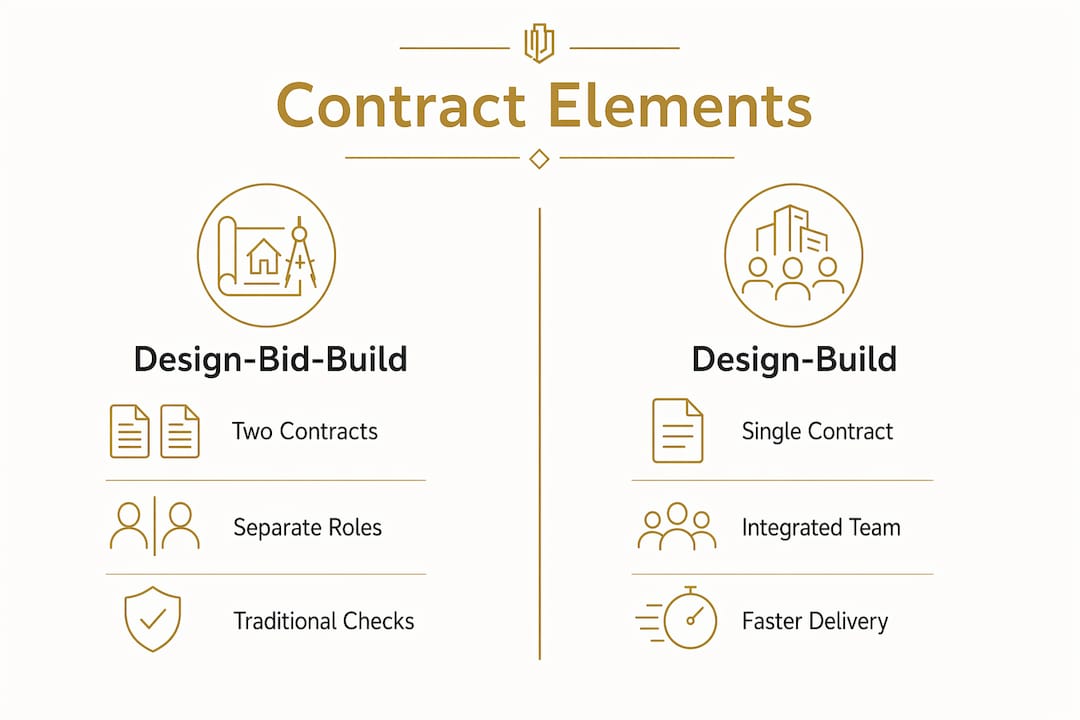
In design-bid-build, the owner holds two separate contracts: one with the designer and one with the contractor. The designer completes drawings, the owner solicits bids, and the contractor builds to those drawings. This traditional model creates a clear separation of roles but also creates a gap where miscommunication thrives. When a field conflict arises, the designer and contractor may each point to the other’s scope, leaving the owner to mediate.
Design-build contracts combine design and construction under a single agreement, giving the owner one point of accountability for both creative and construction outcomes. This model encourages the designer and contractor to collaborate from day one, catching constructibility problems before they become change orders. For luxury projects involving subterranean basements, oversized glazing systems, or complex structural engineering, that early alignment is not a convenience. It is a financial safeguard.
| Feature | Design-bid-build | Design-build |
|---|---|---|
| Number of contracts | Two (designer + contractor) | One (combined entity) |
| Accountability | Split between parties | Single point of responsibility |
| Communication flow | Sequential | Concurrent and integrated |
| Timeline efficiency | Slower (phases are linear) | Faster (phases overlap) |
| Owner involvement | High (mediates disputes) | Lower (team self-coordinates) |
| Best suited for | Standard or publicly bid projects | Complex, high-end custom builds |
Pro Tip: If you are commissioning a luxury home in Los Angeles with custom structural elements, request a design-build proposal alongside any traditional bids. The comparison will reveal which team has already thought through your project’s hardest problems.
What roles and responsibilities do designers and contractors have?
The designer’s role in a luxury project centers on vision, documentation, and coordination. The architect or interior designer produces construction drawings, selects materials and finishes, coordinates with structural and MEP (mechanical, electrical, plumbing) engineers, and maintains design intent throughout the build. Their authority is creative and technical, but it stops at the construction fence.

The contractor’s role is execution, logistics, and constructibility. A general contractor manages subcontractors, schedules inspections, procures materials, and translates the designer’s drawings into physical reality. Where the designer asks “what should this be?” the contractor asks “how do we actually build this?” Both questions must be answered before a single foundation pour begins.
The intersection of these roles is where luxury projects either succeed or fail. Professional coordination cross-referencing nine disciplines prior to construction, including architectural, structural, mechanical, electrical, plumbing, fire protection, civil, landscape, and interior design, significantly reduces schedule slips and field conflicts in high-value projects. This level of coordination requires the designer and contractor to meet regularly, share updated drawings, and resolve conflicts before they reach the field.
Key responsibilities for each party in a luxury build include:
- Designer: Produce complete construction documents; coordinate all engineering consultants; review shop drawings and submittals; conduct site visits to verify design intent; issue clarifications promptly when field questions arise.
- Contractor: Review drawings for constructibility before breaking ground; provide accurate cost feedback during design development; manage subcontractor schedules; flag design conflicts immediately rather than building around them; maintain a detailed project schedule with milestone dates.
Pro Tip: Ask your contractor to conduct a formal constructibility review before the permit set is finalized. Early constructibility reviews by the builder during the design phase can prevent 30 to 50 percent of reactive change orders, which is a significant cost protection on any build above $2 million.
Why collaboration between designers and contractors matters
Poor communication between designers and contractors is not a minor inconvenience. Poor communication causes delays in over 85% of design-led projects, while integrated teams can reduce timelines by up to 30%. That statistic means a 12-month luxury build could finish in roughly 8 months under a well-coordinated team, saving carrying costs, financing interest, and the personal disruption of an extended construction period.
The most common communication failures in luxury projects follow a predictable pattern:
- Late design changes: The designer revises a detail after the contractor has already ordered materials or completed rough framing. The result is a change order that costs three to five times what the revision would have cost at the drawing stage.
- Undocumented verbal agreements: The owner tells the contractor to “just make it work” on a detail the designer has not approved. Months later, the designer rejects the field solution and the contractor must redo the work.
- Siloed schedules: The designer submits revised drawings on a timeline that does not account for the contractor’s procurement lead times, causing material delays that cascade through the entire schedule.
- Absent owner decisions: When the owner delays selecting finishes or approving design alternatives, both the designer and contractor stall. On a luxury project, a two-week owner decision delay can translate to a six-week schedule impact.
Dedicated clash detection meetings using cross-disciplinary plan reviews are standard practice on projects valued at $5 million and above, and they exist precisely because these communication failures are predictable and preventable. Digital tools such as Procore, Autodesk Construction Cloud, and Bluebeam Revu give designers and contractors a shared platform for drawing management, RFI tracking, and schedule coordination, reducing the friction that causes delays.
How contracts shape the design-contractor relationship and protect owners
A contract is not paperwork. It is the operating system of the design-contractor relationship, defining who owns which decisions, who bears which risks, and what happens when the two parties disagree. A clearly written design-build contract establishes performance standards, cost allocation, and creative flexibility to avoid disputes. Without that clarity, even a well-intentioned team will eventually find itself in a conflict that the project cannot absorb.
For luxury homeowners and investors, the critical contract elements to negotiate and verify include:
| Contract element | What it covers | Why it matters for owners |
|---|---|---|
| Scope of work | Exact deliverables for design and construction | Prevents scope creep and unauthorized substitutions |
| Performance standards | Material grades, finish quality, structural tolerances | Protects the aesthetic and structural integrity of the build |
| Change order protocol | How changes are requested, priced, and approved | Controls budget exposure from design revisions |
| Design adequacy clause | Who is responsible if the design has errors | Critical in design-build, where the burden shifts to the contractor |
| Dispute resolution | Mediation, arbitration, or litigation pathway | Determines how quickly conflicts are resolved |
In design-build contracts, owners lose traditional architectural checks and must rigorously vet the contractor’s design portfolio upfront. This is the trade-off for single-point accountability: you gain efficiency and coordination, but you surrender the independent designer who would otherwise review the contractor’s work on your behalf. The solution is thorough due diligence before signing, not after. Review completed projects, speak with past clients, and verify that the design-build team has direct experience with the specific building systems your project requires.
Design-build integrated teams provide faster project delivery and fewer delays by overlapping design and construction phases with continuous cost feedback. For a $3 million to $10 million luxury home in Los Angeles, that overlap can mean the difference between a project that stays within budget and one that accumulates change orders through sequential, disconnected phases.
Key Takeaways
A successful design-contractor relationship requires a clear delivery model, defined roles, proactive communication, and a contract that protects the owner’s interests at every phase.
| Point | Details |
|---|---|
| Choose the right delivery model | Design-build offers single accountability; design-bid-build suits simpler or publicly bid projects. |
| Define roles before breaking ground | Designers own vision and documentation; contractors own execution and constructibility. |
| Prioritize early collaboration | Constructibility reviews during design prevent 30 to 50 percent of costly change orders. |
| Invest in contract clarity | Performance standards, change order protocols, and design adequacy clauses protect owner interests. |
| Use digital coordination tools | Platforms like Procore and Autodesk Construction Cloud reduce communication failures that delay 85% of projects. |
What I have learned about design-contractor relationships in luxury builds
After working on complex luxury projects across Los Angeles, including subterranean basements and large-format glass installations, the pattern I see most often is this: owners underestimate how much the structure of the relationship matters before construction begins. They focus on the design, the finishes, the views. They sign contracts quickly because they are excited to build. And then, six months in, they are mediating between a designer and a contractor who have fundamentally different interpretations of the same drawing.
Mutual respect and ongoing dialogue between designers and contractors are foundational to avoiding costly reactive changes. That sounds obvious, but in practice it means the contractor needs to be in the room during design development, not just handed a permit set and told to build. When the contractor understands why a design decision was made, they protect it in the field. When they do not, they improvise.
The owners who have the best outcomes are the ones who treat the design-contractor relationship as a system they actively manage, not a service they passively receive. They attend coordination meetings. They make decisions on schedule. They ask hard questions about constructibility before approving design packages. Design-build’s cultural emphasis on collaboration and transparency prevents the blame-shifting that derails traditional methods, but only when the owner holds the team to that standard from day one.
My honest recommendation: if you are building a luxury home in Los Angeles, do not select your designer and contractor independently and hope they will collaborate. Select a team that has already built that relationship, and verify it with references from completed projects of similar complexity.
— Daniel
How Builtblackbriar delivers integrated design-build for Los Angeles luxury homes
Builtblackbriar was built around the premise that luxury homeowners and investors deserve a single team that owns both the design and the construction outcome, with no gaps in accountability and no surprises on the final invoice.

Builtblackbriar’s process integrates technology-driven coordination, real-time client updates, and deep expertise in complex builds including subterranean structures and oversized glazing systems. Every project begins with a formal constructibility review before the permit set is finalized, and coordination meetings are scheduled throughout the build to prevent the field conflicts that derail timelines. If you are planning a luxury home in Los Angeles or evaluating options for a high-end build in Westlake or Westchester, explore Builtblackbriar’s design-build services and request a consultation to see how integrated delivery protects your investment.
FAQ
What is the difference between design-build and design-bid-build?
Design-build uses a single contract combining design and construction under one accountable entity, while design-bid-build uses two separate contracts and a sequential process. Design-build is faster and better suited to complex luxury projects; design-bid-build offers more traditional checks but creates communication gaps between the designer and contractor.
How do I know if a design-contractor team will collaborate effectively?
Ask for references from completed projects of similar scope and complexity, and specifically ask past clients how the team handled design conflicts and change orders. A team with a genuine collaborative culture will have a clear process for resolving field conflicts without escalating them to the owner.
What should a design-build contract include to protect my interests?
A strong design-build contract covers scope of work, performance standards, change order protocols, a design adequacy clause, and a dispute resolution pathway. Clear contract frameworks align project goals while protecting owner interests and controlling costs throughout the build.
Why do luxury projects experience more delays than standard builds?
Luxury projects involve more custom systems, longer material lead times, and tighter design tolerances, all of which amplify the impact of poor communication. Poor communication causes delays in over 85% of design-led projects, and the complexity of high-end builds makes each communication failure more expensive to recover from.
When should the contractor be involved in the design process?
The contractor should be involved during design development, before the permit set is finalized. Early involvement allows the contractor to flag constructibility issues, provide accurate cost feedback, and prevent the reactive change orders that account for a significant share of budget overruns on luxury builds.