

May 29, 2026
Why Contractor Experience Matters in Commercial Builds

Contractor experience in commercial construction is defined as the proven capacity to manage complex building projects through disciplined systems, anticipatory problem-solving, and coordinated execution across multiple trades and regulatory environments. For commercial property developers, this distinction separates projects that close on time and on budget from those that spiral into costly rework, disputes, and schedule failures. Experienced contractors bring more than technical knowledge. They bring documented processes, subcontractor relationships, procurement intelligence, and risk frameworks that inexperienced teams simply cannot replicate. The difference shows up in every phase, from preconstruction planning through final inspection, and the financial implications are significant enough to make contractor qualifications for commercial projects one of the highest-leverage decisions a developer makes.
Why contractor experience matters in commercial builds: risk reduction first
The most direct benefit of contractor experience is the early identification of problems that would otherwise surface mid-build at maximum cost. Experienced contractors anticipate permitting conflicts, sequencing gaps, and compliance vulnerabilities before they become field emergencies. This proactive posture is not instinct. It is the product of pattern recognition built across dozens of comparable projects.
Building Information Modeling (BIM) is the clearest example of how experienced teams translate process discipline into measurable outcomes. A 2026 study of 253 bridge projects found that BIM adoption reduces rework time wastage by 70 to 85 percent and delivers cost savings of 65 to 75 percent. That scale of improvement is only achievable when a contractor’s team already knows how to use BIM as a coordination and clash-detection tool, not just a drafting aid.
Sequencing discipline is equally important. When a general contractor understands how mechanical, electrical, and plumbing trades interact in a commercial structure, they schedule work to prevent cascading delays. An inexperienced team that allows drywall to proceed before rough-in inspections are cleared, for instance, creates rework that compounds across every downstream trade. Experienced contractors treat sequencing as a risk management discipline, not a scheduling convenience.
- Early permit and compliance review prevents mid-project stop-work orders
- BIM-based clash detection eliminates conflicts between structural, MEP, and architectural systems before they reach the field
- Sequencing confirmations with subcontractors prevent downstream trade disruptions
- Documented lessons learned from prior projects inform proactive risk registers
Pro Tip: Ask any contractor candidate to walk you through a specific instance where they caught a sequencing or permitting issue in preconstruction. The specificity and speed of their answer tells you everything about their actual experience level.
How does subcontractor coordination affect project outcomes?
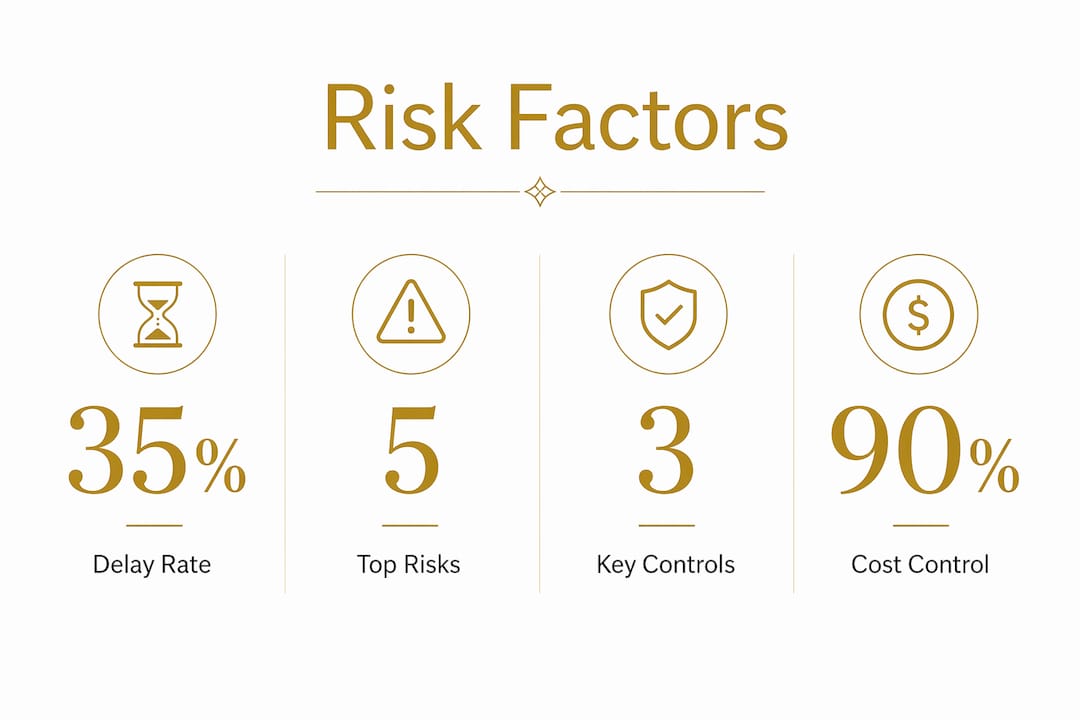
About 35 percent of construction project delays trace back to subcontractor coordination failures. That figure, drawn from FMI and Autodesk research, means that more than one in three schedule overruns has nothing to do with weather, materials, or design. It comes down to whether the general contractor can manage the human and contractual complexity of a multi-trade build.

Experienced general contractors treat subcontractor management as a strategic function. Clear subcontractor agreements that define scope, payment terms, scheduling obligations, and liability flow-down clauses are the foundation. Without them, disputes over who owns a scope gap or who absorbs a delay cost consume weeks of management time and often end in litigation.
The operational systems that experienced contractors use to manage subcontractors follow a consistent pattern:
- Written scope documents issued before mobilization, with explicit inclusions and exclusions for every trade
- Schedule confirmations sent 72 hours before each trade’s start date, with documented acknowledgment
- Daily field reports capturing progress, workforce counts, and any deviations from the approved schedule
- RFI and change order logs that link every request to a specific trade, date, and cost impact
- Rolling 3-week lookahead schedules updated weekly and reviewed in coordination meetings
The documentation discipline is what separates experienced contractors from those who manage by memory. Tracking every RFI, change request, and schedule deviation linked to specific trades and dates enables pattern recognition. It also creates the evidentiary record that resolves disputes without litigation.
| Coordination practice | Impact on project outcomes |
|---|---|
| Written scope agreements with flow-down clauses | Reduces liability disputes and scope gap claims |
| 72-hour schedule confirmations | Cuts no-show downtime and idle crew costs |
| Daily field documentation | Creates dispute-resolution record and tracks progress |
| Weekly lookahead schedule updates | Prevents minor slippages from compounding into major delays |
How experienced contractors control costs and material risk
The five highest-severity cost risk factors in commercial construction are material price escalation, design changes, poor estimation, unmanaged change orders, and delayed payments. A 2026 MDPI study of contractor perspectives confirmed these as top cost risk drivers across project types. Experienced contractors do not eliminate these risks, but they manage them through procurement intelligence and contractual structure that inexperienced teams lack.
Material price escalation is the most visible risk in current market conditions. Experienced contractors address it through early procurement of long-lead items, price escalation clauses in owner contracts, and supplier relationships that provide advance notice of supply disruptions. A contractor who has managed three or four commercial builds through volatile material markets has a procurement playbook. A first-time commercial contractor is improvising.
Bid leveling is another area where experience pays measurable dividends. Detailed bid leveling processes, including scope baseline comparisons and pre-award clarifications, prevent the post-award change orders that inflate project costs by 10 to 20 percent on poorly managed builds. Experienced general contractors invest significant preconstruction time in this process because they have seen what happens when scope gaps surface after contracts are signed.
- Price escalation clauses protect the owner and contractor from commodity volatility during long-duration projects
- Early procurement of structural steel, glazing systems, and mechanical equipment locks in pricing before market shifts
- Lessons-learned databases from prior projects improve cost estimation accuracy on comparable scopes
- Cash flow management protocols prevent payment delays from triggering subcontractor demobilization
Pro Tip: Review a contractor’s last three project cost reconciliations before awarding a contract. The gap between original estimate and final cost, and the explanations for that gap, reveals more about their cost management capability than any reference call.
What should commercial developers look for in a contractor?
Evaluating contractor qualifications for commercial projects requires looking past portfolio photos and reference lists. The operational indicators of genuine experience are specific and observable. Maintaining rolling 3-week lookahead schedules updated weekly is one of the clearest signs of contractor maturity. It reflects the discipline to plan ahead rather than react, and it gives developers visibility into schedule health before problems become crises.
Experienced contractors also treat preconstruction evaluations as strategic risk management, not administrative formalities. They qualify subcontractors on financial stability, safety records, and prior performance on comparable scopes, not just on price. This approach reduces the probability of mid-project subcontractor failure, which is one of the most disruptive events a commercial build can experience.
Operational continuity planning is a dimension that developers often overlook until it becomes a problem. Experienced construction teams plan sequencing to minimize disruption to ongoing business operations, using phased staging, temporary barriers, and clear communication protocols. For occupied commercial properties undergoing renovation, this capability is not optional. It is the difference between a tenant staying and a tenant leaving.
| Indicator | Experienced contractor | Inexperienced contractor |
|---|---|---|
| Preconstruction process | Formal risk register, bid leveling, scope review | Informal or absent |
| Subcontractor management | Written agreements, documented coordination | Verbal agreements, reactive management |
| Schedule discipline | Weekly lookahead, documented deviations | Milestone-only tracking |
| Cost management | Escalation clauses, early procurement | Fixed-price assumptions, reactive purchasing |
| Documentation | Daily reports, RFI logs, change order tracking | Inconsistent or minimal |
Red flags worth noting: a contractor who cannot produce a sample daily field report, who has no written subcontractor agreement template, or who cannot explain their bid leveling process has not operated at the level commercial builds require. Poor contractor experience is directly linked to increased rework, compliance risk, and financial penalties. The risk is not just operational. It is financial and reputational.
Key takeaways
Contractor experience in commercial builds directly determines project efficiency, cost control, and risk outcomes, making it the single most consequential selection criterion for developers.
| Point | Details |
|---|---|
| Risk prevention starts in preconstruction | Experienced contractors identify permitting, sequencing, and compliance issues before they reach the field. |
| BIM and process discipline reduce rework | Teams using BIM-driven coordination cut rework time by up to 85 percent on complex builds. |
| Subcontractor coordination drives schedule outcomes | Over a third of project delays trace to coordination failures that experienced GCs prevent through documentation and written agreements. |
| Cost control requires procurement intelligence | Early procurement, escalation clauses, and bid leveling prevent the cost overruns that inexperienced teams absorb reactively. |
| Operational indicators reveal true experience | Rolling lookahead schedules, daily field reports, and formal subcontractor agreements are observable proof of contractor maturity. |
What I’ve learned from watching experience play out on complex builds
Having worked alongside both seasoned and first-time commercial contractors, the performance gap is not subtle. It shows up in week two, not week twenty. The experienced team has already resolved three potential conflicts in preconstruction that the inexperienced team will not discover until they are standing in a half-framed building wondering why the mechanical rough-in does not fit the structural bay.
What surprises most developers is that the value of experience is not primarily technical. It is relational and systemic. Experienced contractors have subcontractor relationships built on prior performance. They know which electrical sub shows up on time and which one needs a 72-hour confirmation call. They know which inspectors in a given jurisdiction prioritize specific documentation. That institutional knowledge is not written down anywhere. It is carried by the team.
The uncomfortable truth is that hiring on price rather than experience is a false economy in commercial construction. The savings on the front end rarely survive contact with the first unforeseen condition. Developers who have been through one difficult project with an inexperienced contractor almost universally change their selection criteria afterward. The goal is to not need that lesson.
— Daniel
Build with a team that has already solved your hardest problems

Builtblackbriar brings the operational depth that commercial and luxury builds in Los Angeles demand. From subterranean basement construction to oversized glazing systems, the team has built the processes, subcontractor relationships, and documentation discipline that protect your schedule and budget from the first preconstruction meeting through final delivery. Every project runs on transparent communication, weekly schedule updates, and proactive risk management, so you are never the last to know about a challenge. If you are evaluating contractors for a complex build, explore Builtblackbriar’s full range of services or connect directly through the project inquiry page to discuss your specific scope.
FAQ
Why does contractor experience matter more in commercial than residential builds?
Commercial builds involve more regulatory complexity, more trades, and higher financial stakes than most residential projects. Experienced contractors manage these layers through formal systems that residential-scale work rarely requires.
What is the biggest risk of hiring an inexperienced commercial contractor?
Poor contractor experience is directly linked to increased rework, compliance violations, and financial penalties. The cascading effect of a single coordination failure can delay an entire project by weeks and trigger penalty clauses.
How does BIM reduce rework in commercial construction?
BIM enables clash detection between structural, mechanical, and architectural systems before construction begins. Research on 253 bridge projects found BIM reduces rework time wastage by 70 to 85 percent when used by experienced teams.
What questions should I ask a contractor to assess their experience?
Ask for a sample daily field report, their subcontractor agreement template, and a walkthrough of their bid leveling process. Ask them to describe a specific preconstruction issue they caught before it reached the field.
How do experienced contractors handle material price escalation?
Experienced contractors use early procurement of long-lead items, price escalation clauses in owner contracts, and established supplier relationships to manage commodity volatility. These strategies come from lessons learned across multiple prior projects, not from theory.