

May 30, 2026
Why Custom Homes Take Longer to Build in 2026

Custom home construction is defined by a multi-phase process spanning design, permitting, and tightly sequenced construction that routinely extends timelines to 12 to 24 months, and sometimes beyond 36 months for luxury builds. Unlike production homes built from pre-approved plans on pre-zoned lots, every custom home starts from zero. That means every decision, every permit, and every trade coordination point is unique to your project. Understanding why custom homes take longer is not just useful context. It is the foundation for setting realistic expectations and making smarter decisions before you break ground.
Why custom homes take longer than standard builds
The custom home building timeline is not a single straight line. It is a sequence of distinct phases, each with its own dependencies, approvals, and potential sticking points. Most homeowners focus on the construction phase and underestimate everything that comes before it.
The pre-construction phases most homeowners overlook
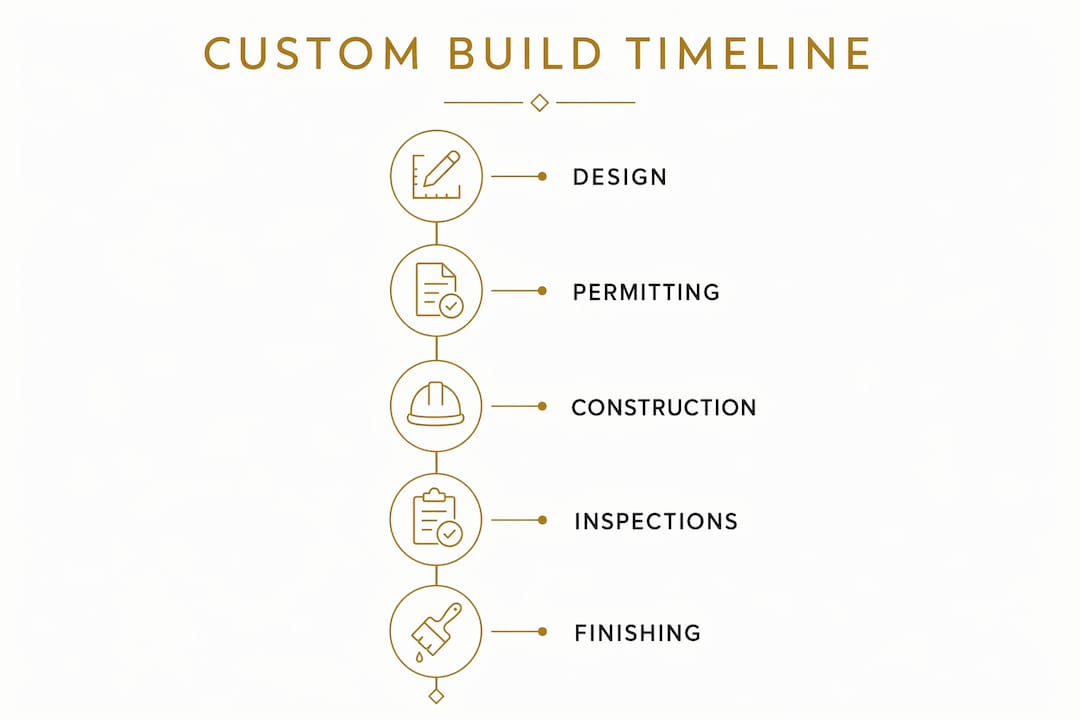
Design and architecture alone can consume 3 to 6 months. Structural engineering, civil engineering, and interior design coordination add more time on top of that. For a complex luxury build with subterranean elements or large-format glass systems, design and permitting together frequently total 10 to 18 months before a single shovel touches the ground. That figure surprises most first-time custom home buyers, who assume permits take a few weeks.
Permitting timelines vary dramatically by jurisdiction. In markets like Los Angeles and San Diego, permit approvals can run 4 to 12 months or longer due to zoning complexity, environmental review requirements, and departmental backlogs. In less regulated markets, the same approval might take 6 to 8 weeks. The construction phase itself typically runs 8 to 14 months, depending on scope, site conditions, and the availability of skilled trades.
Pro Tip: Ask your builder for a phase-by-phase schedule at the start of the project, not just an estimated completion date. A schedule that shows design, permitting, and construction as separate tracked phases gives you a far more accurate picture of the full custom home building timeline.
| Phase | Typical Duration |
|---|---|
| Architecture and design | 3 to 6 months |
| Engineering and coordination | 1 to 3 months |
| Permitting and approvals | 4 to 12 months |
| Construction | 8 to 14 months |
| Total (typical range) | 16 to 35 months |
The full custom build timeline of 12 to 24 months cited by industry sources refers primarily to the construction phase plus immediate pre-construction. When you include design development and permitting from day one, the realistic window for most luxury projects is closer to 18 to 36 months. That is not a warning. It is simply the honest math of building something that has never been built before.
How do late decisions and change orders slow down your build?
Late homeowner selections are the single biggest driver of custom home construction delays, ranking ahead of weather, permitting, and material shortages in their impact on schedule. This finding from Ressio Software reflects a pattern that experienced builders see on nearly every project. The reason is structural: custom home construction runs on a critical path, and many decisions must be locked in weeks or months before the trade that needs them arrives on site.
When a homeowner delays selecting a tile, a fixture, or a window specification, the ripple effect is immediate. Material lead times for specialty products commonly used in custom builds can run 8 to 16 weeks. A delayed decision means a delayed order, which means a delayed installation, which means every downstream trade (the drywallers, painters, and finish carpenters) waits. Scope changes affecting roughly 40% of construction projects globally add an average of 8 months to project timelines when not managed with formal documentation.
The most damaging scenario is a late-stage design change after construction has started. Relocating a wall, changing a structural element, or upgrading a mechanical system mid-build does not just affect that one item. It triggers new engineering reviews, new permit amendments, and new subcontractor scheduling. The cost is measured in both dollars and weeks.
To avoid these delays, experienced builders and homeowners use several proven practices:
- Lock in all critical-path selections (flooring, cabinetry, plumbing fixtures, windows) before the relevant trade is scheduled, not when they arrive.
- Require formal written change orders for every scope modification, no matter how small. Verbal agreements create confusion and scheduling conflicts.
- Work with a custom home builder who uses a documented selections process with clear deadlines tied to the construction schedule.
- Understand which decisions are on the critical path and which have more flexibility. Your builder should be able to tell you exactly which choices cannot wait.
Pro Tip: Create a selections calendar at the start of your project. Map every finish and fixture decision to the date by which it must be ordered, working backward from the scheduled installation date. This single tool prevents more delays than any other planning exercise.
What external factors contribute to custom home construction delays?
Even a perfectly planned project faces forces outside anyone’s control. Understanding these factors helps you build realistic buffers into your schedule rather than being caught off guard.
-
Weather. Bad weather halts foundation pours, framing, and roofing for days or weeks at a time. In custom builds, where scheduling is less standardized than in production housing, weather delays are harder to absorb because there is no identical neighboring project to shift resources to.
-
Labor shortages. Skilled labor shortages cause crews to split time between multiple jobs, pushing back scheduled start dates for individual trades. A framing crew that is two weeks behind on another project delays your entire construction sequence.
-
Regional regulatory complexity. Average construction times vary from 7.8 months in the South Atlantic region to 13.7 months in the Middle Atlantic region, driven primarily by zoning strictness and inspection requirements. For custom luxury builds in high-regulation markets like Los Angeles, these averages skew even longer. That 6-month gap between regions represents real schedule risk that homeowners in complex jurisdictions must plan for.
-
Supply chain disruptions. Specialty materials common in luxury custom builds (oversized glass panels, imported stone, custom millwork) carry long lead times and are vulnerable to shipping delays. A single backordered item can hold up an entire phase of work.
-
Inspection scheduling. Many jurisdictions require multiple inspections at specific construction milestones. If an inspector is unavailable for two weeks, work on the next phase cannot legally proceed. This is a frequently overlooked source of delay in custom home project complexities.
The combination of these factors is why experienced builders build schedule buffers of 10 to 20 percent into their project timelines. A builder who promises a tight deadline with no contingency is not being efficient. They are being optimistic in a way that rarely serves the client.
How does trade sequencing affect how long your home takes?
Construction is a relay race, not a parallel sprint. Each trade depends on the one before it completing its work correctly and on time. A few days’ delay for a plumber can push electricians, drywallers, and painters back by weeks. This cascade effect is the mechanical reason why custom home construction delays compound so quickly.
The sequencing problem is made worse when project schedules are not live documents. Schedules that become outdated and invisible to team members allow a two-week task that takes four weeks to push later trades back by a month before anyone notices. By the time the problem surfaces, the schedule has already slipped significantly.
Effective schedule management in custom home builds requires three things. First, the master schedule must be updated in real time and shared with all subcontractors, not just the general contractor. Second, the builder must actively communicate upcoming trade sequences so each crew knows when their window opens. Third, the homeowner needs visibility into the schedule, not just weekly verbal updates. Technology platforms that provide shared project dashboards (used by builders like Builtblackbriar) give clients and trade partners the same real-time picture of where the project stands.
The luxury home building process at the highest level treats schedule transparency as a client deliverable, not an internal tool. When every stakeholder sees the same schedule and understands the dependencies, delays get flagged and resolved before they cascade into months of lost time.
Key takeaways
Custom homes take longer because every phase, from design through permitting to tightly sequenced construction, is unique to the project and highly sensitive to late decisions, external disruptions, and poor schedule visibility.
| Point | Details |
|---|---|
| Pre-construction is the hidden timeline | Design and permitting alone can add 10 to 18 months before construction begins. |
| Late selections cause the most delays | Locking in critical-path decisions early prevents cascading trade delays. |
| Regional regulation matters | Build timelines vary by up to 6 months depending on local zoning and inspection requirements. |
| Trade sequencing is fragile | A delay in one trade pushes every downstream trade back, compounding quickly. |
| Schedule transparency reduces slippage | Live, shared project schedules catch compounding delays before they become critical. |
What I’ve learned about managing custom home timelines
The homeowners who have the smoothest custom build experiences share one trait: they treated the design and permitting phase with the same urgency they gave to construction. Most timeline frustrations I have seen stem from the assumption that the clock starts when the foundation is poured. It starts the day you engage an architect.
The second pattern I have noticed is that builders who invest in schedule transparency consistently deliver closer to their original timelines than those who manage schedules internally and share only summaries. When a subcontractor can see that their window opens in three weeks, they plan accordingly. When they find out the day before, they cannot. That gap in communication is where months disappear.
There is also an uncomfortable truth about change orders: most homeowners underestimate how disruptive even small changes are once construction is underway. A different countertop material sounds minor. But if the new material has a 10-week lead time and the original had a 4-week lead time, you have just added 6 weeks to your kitchen completion date, and potentially to your certificate of occupancy. Documenting every change formally and reviewing its schedule impact before approving it is not bureaucracy. It is the single most effective thing a homeowner can do to protect their timeline.
Finally, choose your builder based on their process, not just their portfolio. A stunning portfolio built on chaotic timelines and frustrated clients is not a model you want to replicate. Ask builders how they manage subcontractor scheduling, how they handle change orders, and what technology they use to keep clients informed. The answers tell you more about your future experience than any finished photograph.
— Daniel
Build smarter with Builtblackbriar

Builtblackbriar works with discerning homeowners across Los Angeles who understand that a custom home is a long-term investment, and that the process deserves the same precision as the finished product. Their integrated approach connects design, permitting, and construction scheduling into a single transparent workflow, so clients always know where their project stands and why. Builtblackbriar’s experience with complex builds, including subterranean basements and large-format glass installations, means they have navigated the permitting and trade coordination challenges that derail less experienced teams. If you are planning a luxury custom home and want a builder who treats your timeline as seriously as your design, explore Builtblackbriar’s luxury home building services and see how their process works.
FAQ
How long does it take to build a custom home?
Custom homes typically take 12 to 24 months from construction start to completion, but when design and permitting are included, the full timeline commonly runs 18 to 36 months. Luxury builds in high-regulation markets like Los Angeles frequently reach the upper end of that range.
What causes the most delays in custom home construction?
Late homeowner selections on critical-path items are the leading cause of custom home construction delays, ahead of weather and permitting. Delaying a finish or fixture decision blocks material orders and subcontractor scheduling, creating a cascade that affects every downstream trade.
Why does permitting take so long for custom homes?
Custom homes require permits reviewed against unique plans rather than pre-approved templates, which takes significantly more time. In complex jurisdictions like Los Angeles or San Diego, permit approvals can run 4 to 12 months due to zoning review, environmental requirements, and departmental workload.
How do change orders affect a custom home timeline?
Scope changes affect roughly 40% of construction projects globally and add an average of 8 months to timelines when not managed with formal documentation. Every change order should be reviewed for its schedule impact before it is approved.
Does the region where I build affect how long construction takes?
Yes, significantly. Regional construction timelines range from 7.8 months in the South Atlantic to 13.7 months in the Middle Atlantic, driven by local zoning complexity and inspection requirements. Custom luxury builds in high-regulation markets consistently exceed these averages.